
Thawb in Arabic: ثَوْب, garment and long robe
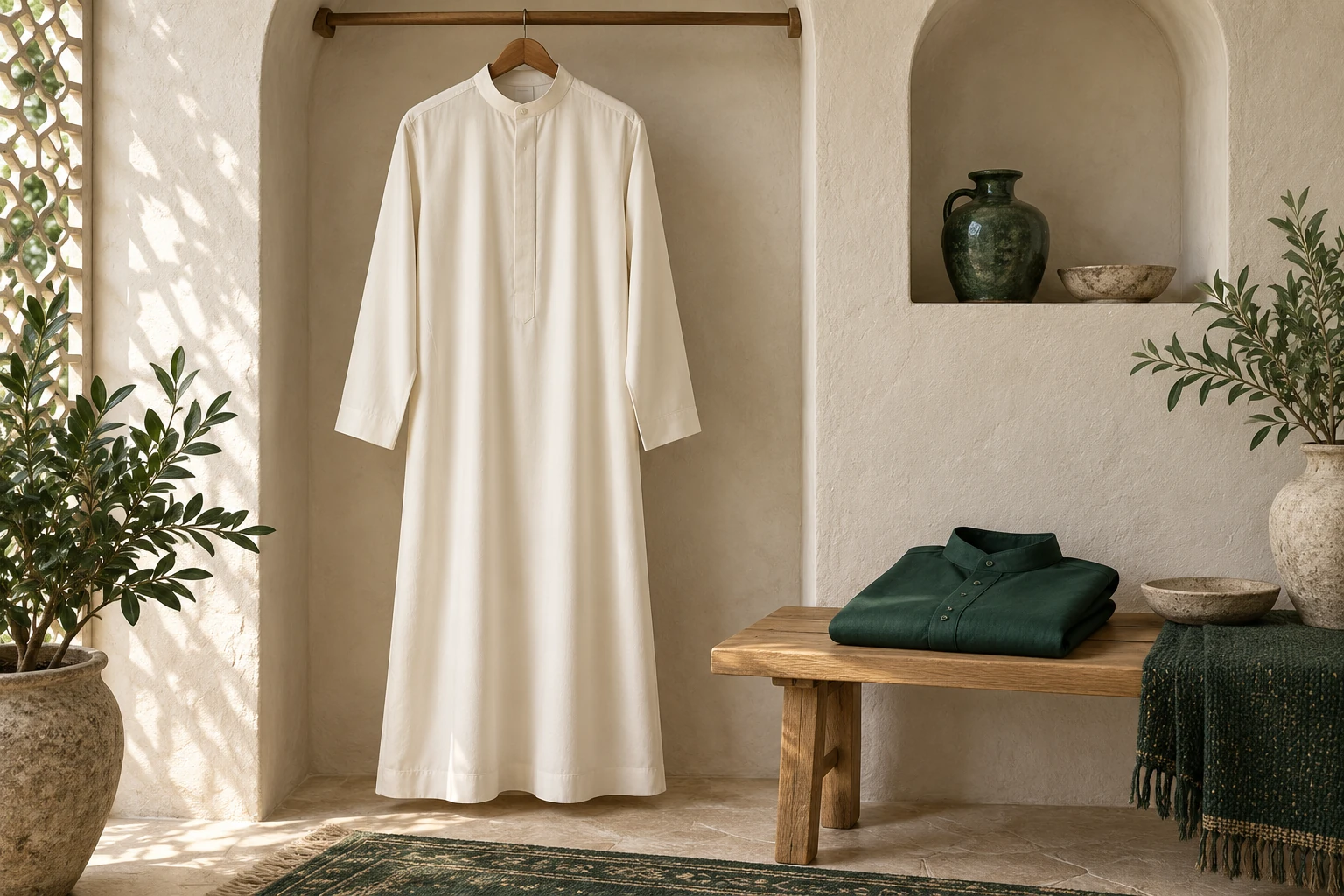
The Arabic word ثَوْب (thawb) means “garment” and can also refer to a long robe, depending on context. It is masculine and has two common dictionary plurals: أَثْوَاب (athwāb) and ثِيَاب (thiyāb). This lesson distinguishes the general meaning from the more specific use without limiting the word to one cut or to the wearer’s gender.
What does ثَوْب mean?
The Cairo Academy’s dictionary defines ثَوْب as something worn. “Garment” is therefore a better starting point than a translation restricted to “robe”. To understand a sentence, look at its details: material, length, situation and accompanying clothes. The word alone does not necessarily specify all these features.
The Damascus Academy also records a use for a loose garment reaching the ankles. This explains the translation “long robe” in some contexts. The illustration shows one possible use, not an exhaustive definition. Depicting an ivory garment does not mean that the word requires that colour.
Learn both plurals together
أَثْوَاب and ثِيَاب are two broken plurals of the same noun: the pattern changes rather than simply taking a regular ending. Do not memorise an automatic distinction between “long robes” and “clothes”. Context guides the translation, and both forms belong to the vocabulary of clothing.
The isolated words in the table omit case endings. In a vocalised sentence, you may see ثَوْبٌ (thawbun) in the nominative or ثَوْبًا (thawban) in the accusative. These endings indicate a grammatical function; they do not create new words.
| Meaning | Arabic | Pronunciation |
|---|---|---|
| A garment | ثَوْب | thawb |
| Garments: first plural | أَثْوَاب | athwāb |
| Clothes: second plural | ثِيَاب | thiyāb |
| The garment | الثَّوْب | ath-thawb |
| My garment | ثَوْبِي | thawbī |
Pronunciation and grammatical gender
Th represents ث, the sound made by allowing air to pass between the tongue and teeth, as in “think”. In thawb, aw is a diphthong, not a long ā. Both plurals, however, contain ā. With the article, الثَّوْب is pronounced ath-thawb: ث is a sun letter, so the l assimilates to this consonant, which is doubled.
The noun is masculine: use هَذَا and a masculine singular adjective. This grammatical gender does not tell you who wears the garment. In Standard Arabic, non-human plurals generally take feminine singular agreement: هَذِهِ الْأَثْوَابُ نَظِيفَةٌ. A masculine singular noun and this plural agreement are entirely compatible.
Shirt, jellabiya and abaya: avoid rigid equivalents
For “shirt” in everyday vocabulary, learn قَمِيص (qamīṣ). Its historical uses can be broader, however, so claiming that a qamīṣ is always short would be misleading. ثَوْب can act as a general term where another noun specifies the type of garment.
The Damascus source notes that some also call the long garment جِلَّابِيَّة (jillābiyya). There is therefore overlap, not a universal distinction based on cut. عَبَاءَة (ʿabāʾa), by contrast, is defined by the Cairo Academy as a loose outer garment worn over other clothes. It is not the general translation of thawb.
Six vocalised and translated sentences
These examples were written for this lesson; they are not quotations. Transliteration includes grammatical endings and connected pronunciation; some endings are not pronounced at a pause. In the last sentence, the number three is followed by a genitive plural. Practise by changing only the material or adjective before transforming the whole sentence.
| Arabic | Meaning |
|---|---|
| هَذَا ثَوْبٌ جَدِيدٌ. hādhā thawbun jadīdun | This is a new garment. |
| هَذَا الثَّوْبُ مِنَ الْقُطْنِ. hādhā th-thawbu mina l-quṭni | This garment is made of cotton. |
| اِشْتَرَيْتُ ثَوْبًا طَوِيلًا. ishtaraytu thawban ṭawīlan | I bought a long garment. |
| غَسَلْتُ ثِيَابِي الْيَوْمَ. ghasaltu thiyābī l-yawma | I washed my clothes today. |
| هَذِهِ الْأَثْوَابُ نَظِيفَةٌ. hādhihi l-athwābu naẓīfatun | These garments are clean. |
| عِنْدِي ثَلَاثَةُ أَثْوَابٍ. ʿindī thalāthatu athwābin | I have three garments. |
Review the word in three steps
Hide the table and recall both plurals. Next, explain why هَذِهِ is used with several garments even though ثَوْب is masculine. Finally, consider “garment” and “long robe” as translations and explain why context can change your choice.
Answers: أَثْوَاب and ثِيَاب; feminine singular agreement for non-human plurals; general meaning or specialised use according to the situation. Above all, learning a word is not about assigning it a single picture, but recognising the contexts in which it takes a more specific meaning.
Frequently asked questions
What does thawb mean in Arabic?
ثَوْب (thawb) means “garment”. Depending on context, it can also refer to a long robe. This more specific use does not replace the word’s general meaning.
Which two plurals should I learn?
Learn أَثْوَاب (athwāb) and ثِيَاب (thiyāb). Both are broken plurals of ثَوْب. Do not automatically reserve the first for robes and the second for other clothes.
How do you pronounce ثَوْب with the article?
Write الثَّوْب and pronounce ath-thawb. The sun letter ث causes the article’s l to assimilate, doubling the th. The sequence aw remains a diphthong.
Does masculine gender mean a garment is only for men?
No. ثَوْب is grammatically masculine, but the noun’s gender does not determine the wearer’s gender. It governs features such as singular agreement.
Are thawb and jellabiya always different?
No. The Damascus Academy notes that some also call the long garment جِلَّابِيَّة. The uses overlap; a universal distinction based on collars, sleeves or cut would be misleading.
How do you say “my clothes”?
You can say ثِيَابِي (thiyābī). The suffix ـِي means “my”, whether the noun is singular or plural. For example: غَسَلْتُ ثِيَابِي الْيَوْمَ, “I washed my clothes today”.
Continue learning clothes in Arabic
Compare the meaning of thawb with shirt, dress and abaya. Then explore all the garments in the clothing guide, or choose another topic in the Vocabulary hub.
Linguistic sources
The Cairo Academy records the general meaning and both plurals. The Damascus Academy documents the long-garment use and overlap with جِلَّابِيَّة; Birzeit University’s Qabas identifies the noun as masculine. The sentences were written for this lesson.