
Vocabulary • Modern Standard Arabic
Fruit in Arabic: names, pronunciation and useful phrases
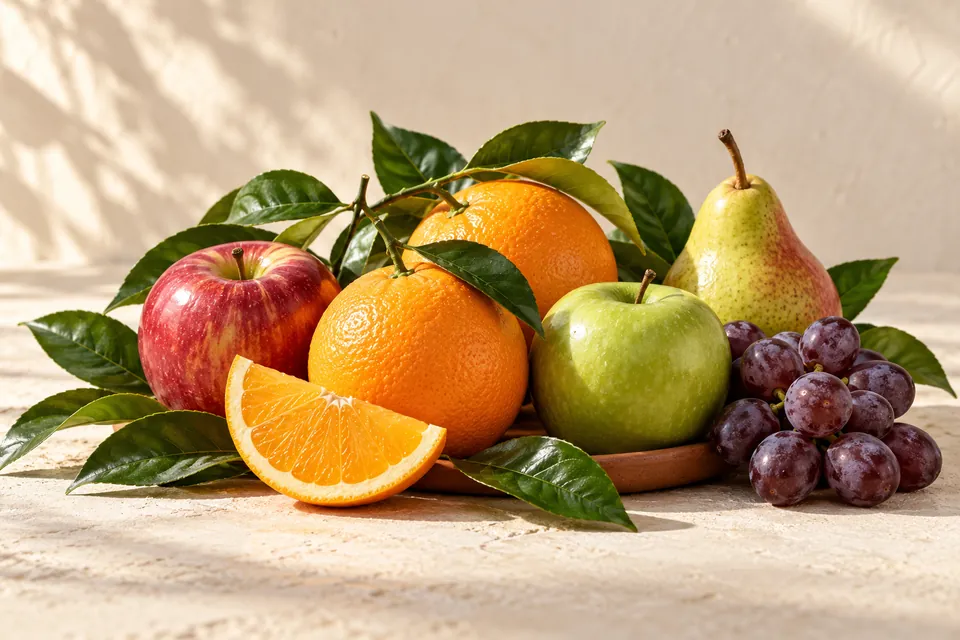
“The fruits” in Arabic is الْفَوَاكِه, al-fawākih. To get started, learn تُفَّاح (tuffāḥ, apple), مَوْز (mawz, banana) and بُرْتُقَال (burtuqāl, orange). These names generally refer to a type of fruit; a single apple or orange has a specific form.
This guide helps you read fruit names, distinguish an individual fruit from a collective name and build short sentences. It covers Modern Standard Arabic, also known as literary Arabic. Everyday words can vary from country to country.
14 fruit names in Arabic
The forms below are vocabulary entries: internal vowels are shown, but grammatical endings are omitted. The “One fruit” column shows how to name a single item. For grapes, this means one grape.
| Translation | Fruit name | Transliteration | One fruit |
|---|---|---|---|
| Apple | تُفَّاح | tuffāḥ | تُفَّاحَة tuffāḥa |
| Banana | مَوْز | mawz | مَوْزَة mawza |
| Orange | بُرْتُقَال | burtuqāl | بُرْتُقَالَة burtuqāla |
| Lemon | لَيْمُون | laymūn | لَيْمُونَة laymūna |
| Grapes | عِنَب | ʿinab | حَبَّة عِنَب ḥabbat ʿinab |
| Date | تَمْر | tamr | تَمْرَة tamra |
| Fig | تِين | tīn | تِينَة tīna |
| Pomegranate | رُمَّان | rummān | رُمَّانَة rummāna |
| Apricot | مِشْمِش | mishmish | مِشْمِشَة mishmisha |
| Peach | خَوْخ | khawkh | خَوْخَة khawkha |
| Plum | بَرْقُوق | barqūq | بَرْقُوقَة barqūqa |
| Cherry | كَرَز | karaz | كَرَزَة karaza |
| Watermelon | بِطِّيخ | biṭṭīkh | بِطِّيخَة biṭṭīkha |
| Melon | شَمَّام | shammām | شَمَّامَة shammāma |
For your first session, learn just apple, banana, orange, grapes and date. Then add fruits you actually eat: words connected to your daily life are easier to use again.
Want to explore a word in more detail? The guide to orange in Arabic explains its spelling, pronunciation, plural and how it differs from the colour orange.
How do you read Arabic fruit names?
Transliteration helps you get started, but it does not replace Arabic script. Keep the two side by side, then try reading the Arabic word without looking at its transliteration.
- u represents a vowel pronounced with the tongue raised towards the back of the mouth and the lips rounded : burtuqāl begins with two short-vowel syllables.
- ā, ī and ū are long vowels : lengthen the “a” in tuffāḥ and the “i” in tīn.
- aw is a sequence of sounds : in mawz, move from “a” to a “w” sound. Keep the movement between the two sounds.
- A doubled consonant is held longer : the double f of tuffāḥ and the double m of rummān correspond to the mark ّ, called shadda.
- ḥ, kh, ʿ and q represent distinct sounds. ح (ḥ) is a breathy sound produced in the throat; خ (kh) is a friction sound produced at the back of the mouth; ع (ʿ) is not simply a vowel; ق (q) is pronounced further back than “k”.
If these symbols are new to you, review the Arabic alphabet, then the guide to Arabic pronunciation. Learn to distinguish the sounds represented by the different Arabic letters.
Fruit, fruits, an apple: three ideas to distinguish
The general word: a fruit and fruits
فَاكِهَة (fākiha) means “fruit”; its plural is فَوَاكِه (fawākih). These are general words, useful when talking about a food category or several types of fruit.
The collective noun: apples as a type or group
تُفَّاح (tuffāḥ) names apples as a type of fruit or refers to apples collectively. To name a single apple, use تُفَّاحَة (tuffāḥa). The same contrast exists between بُرْتُقَال and بُرْتُقَالَة, or between مَوْز and مَوْزَة.
In these examples, the final letter ة marks a single item. It does not mean “one” in every Arabic word, and you cannot use it to form the singular of any noun. Learn the forms together rather than applying the rule automatically.
Counting individual fruits
To count individual oranges, you can use بُرْتُقَالَات (burtuqālāt), the plural of بُرْتُقَالَة. For example, ثَلَاثُ بُرْتُقَالَاتٍ means “three oranges”. The choice of noun form and its ending depends on the number and its position in the sentence, so a fruit list cannot replace a lesson on numbers.
Sentences to put the words into practice
The following sentences are original learning examples in Standard Arabic. Unlike the table entries, they include the grammatical endings used when reading connected speech.
- أُحِبُّ التُّفَّاحَ.
I like apples. - هَذِهِ مَوْزَةٌ.
This is a banana. - أُرِيدُ عَصِيرَ بُرْتُقَالٍ.
I would like some orange juice. - هَلْ عِنْدَكَ عِنَبٌ؟
Do you have any grapes? (addressing a man) - هَلْ عِنْدَكِ عِنَبٌ؟
Do you have any grapes? (addressing a woman)
In the first sentence, the article الـ accompanies the noun when expressing a general preference. In the last two sentences, the difference between عِنْدَكَ and عِنْدَكِ depends on the person you are speaking to, not on the fruit.
Describing how a fruit tastes
Learn حُلْو (ḥulw, sweet), حَامِض (ḥāmiḍ, sour) and نَاضِج (nāḍij, ripe). With an individual orange, these adjectives take a feminine form: بُرْتُقَالَةٌ حُلْوَةٌ means “a sweet orange” and بُرْتُقَالَةٌ نَاضِجَةٌ, “a ripe orange”.
Two common confusions to avoid
Grapes and raisins
عِنَب (ʿinab) means grapes. زَبِيب (zabīb) means raisins. For a single grape, the expression حَبَّة عِنَب (ḥabbat ʿinab) is useful: here, ة is pronounced “t” because the first noun is linked to the next.
A Standard Arabic word does not cover every dialect
A noun learned in a literary Arabic class may be pronounced differently at the market. For orange, for example, Egyptian Arabic uses برتقان, transliterated as burtuʾān. Label your flashcards clearly: “Standard Arabic” or the name of the dialect you are learning. Avoid mixing words from several regions in a sentence presented as a single model.
Frequently asked questions about fruit in Arabic
How do you say “the fruits” in Arabic?
الْفَوَاكِه (al-fawākih) means “the fruits”. Without the article, فَوَاكِه (fawākih) is the plural of فَاكِهَة (fākiha).
Should I learn the words with vowel marks?
At first, vowel marks help you connect spelling with pronunciation. Then learn to recognise the same word without these marks too: تُفَّاح and تفاح are two ways of writing the same word.
Why does one list translate “apple” as tuffāḥ and another as tuffāḥa?
The two forms have different uses. Tuffāḥ refers to the fruit collectively; tuffāḥa refers to one apple. A good vocabulary guide makes clear which meaning it gives.
How can I memorise this list?
Choose five fruits, cover the translation and recall their meanings. Then reverse the exercise and write each Arabic word. The next day, use two words in the sentences on this page before adding new ones.
Continue learning
Go on to the guide to orange in Arabic: fruit, plural and colour, or explore other topics here: Arabic vocabulary by topic.