
A word in detail • Modern Standard Arabic
Banana in Arabic: mawz, pronunciation, and singular form
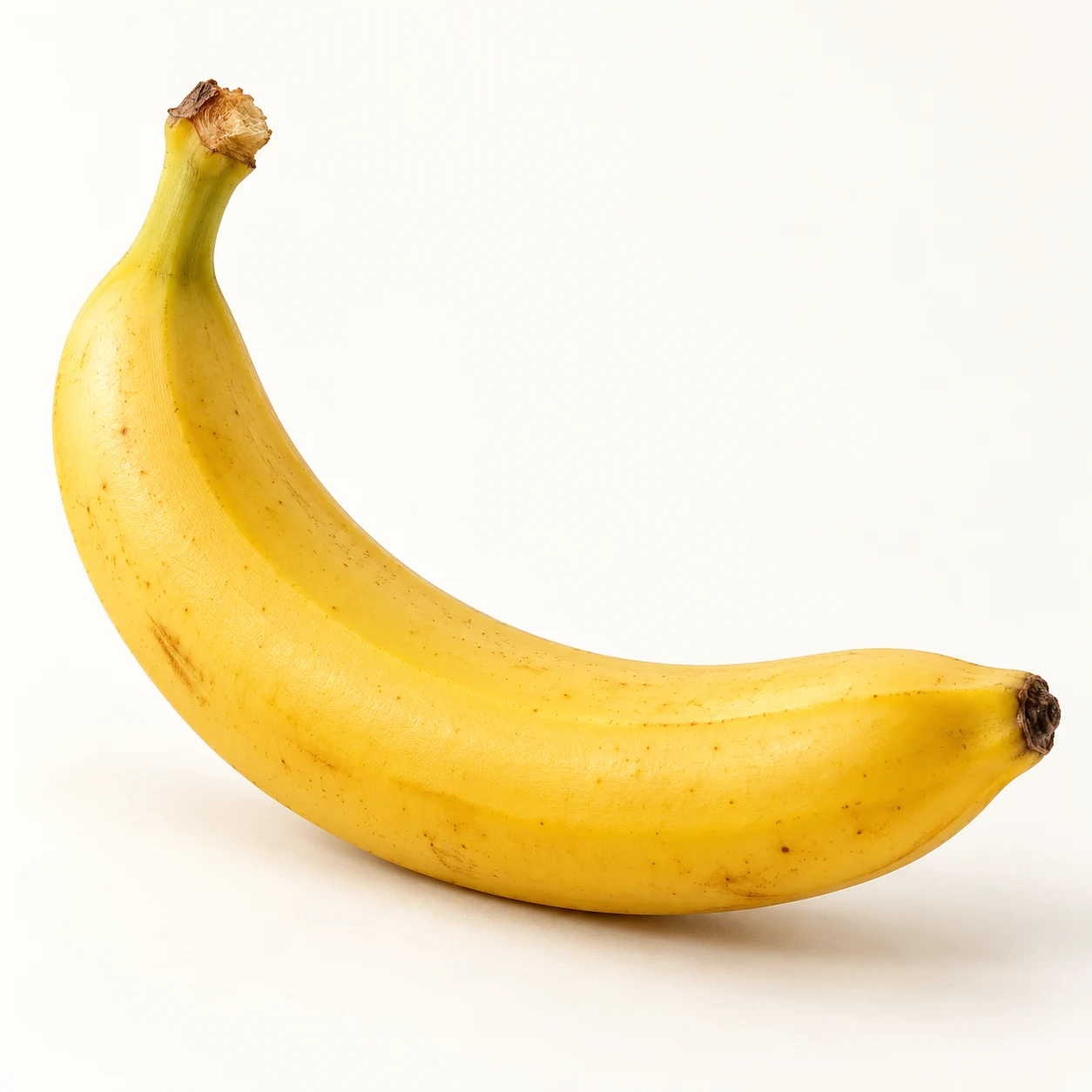
The Arabic word for bananas in general is مَوْز (mawz) in Modern Standard Arabic. A single banana is called مَوْزَة (mawza). To count individual bananas, the plural مَوْزَات (mawzāt) is useful.
This short word lets you practice the sound sequence aw, the difference between a collective noun and a noun for one item, and adjective agreement.
How do you pronounce "mawz"?
In the standard pronunciation used here, mawz contains the sound sequence aw : start with “ma,” glide into the “w” sound, and finish with “z.” Do not read the w as the name of the letter: here, it represents a consonant.
مَوْز has a fatḥa on م and a sukūn on و. This notation represents aw, not the long vowel ū. That is why the standard transcription is mawz, rather than “mouz.”
You may come across transcriptions such as «mooz» in dialectal resources or simplified systems. They do not necessarily follow the same conventions as this entry. When comparing two sources, always check the variety of Arabic being studied and the transcription key.
The form mawza adds a final syllable to refer to a single banana. Repeat the pair mawz / mawza while keeping the same first part.
How do you write "banana" in Arabic?
With vowel marks: مَوْز. Without short-vowel marks: موز. The three letters are م (mīm), و (wāw) and ز (zāy).
The wāw does not join to the next letter in the direction of reading. The ز therefore looks separate, but it is part of the same word: do not insert a space in موز.
To write «a banana,» we use مَوْزَة, with the final letter ة. In our transcription of the isolated word, it appears as «a.» When read in context, it can be pronounced as «t» with an ending.
If you're having trouble joining letters, review the guide to the Arabic alphabet.
Mawz or mawza: bananas in general or one banana
The collective noun مَوْز allows us to talk about bananas as a food or as a category. The form مَوْزَة refers to one banana. Compare:
- أُحِبُّ الْمَوْزَ.
I like bananas. - هَذِهِ مَوْزَةٌ.
This is a banana. - أُرِيدُ مَوْزَةً.
I'd like a banana. - ثَلَاثُ مَوْزَاتٍ
Three bananas.
When referring to bananas, we choose either the collective form or a countable form depending on the context. In the sentence «I like bananas,» we naturally use the collective form with the article. For a specific number, the choice of form and ending depends on the numerical construction.
A ripe, yellow, or sweet banana
With the feminine noun for one banana, مَوْزَة, the adjective is also feminine:
- مَوْزَةٌ نَاضِجَةٌ : a ripe banana.
- مَوْزَةٌ حُلْوَةٌ : a sweet banana.
- مَوْزَةٌ صَفْرَاءُ : a yellow banana.
For «yellow,» the masculine form أَصْفَر becomes صَفْرَاء in the feminine. Therefore, not all feminine adjectives are formed simply by adding ة.
In هَذِهِ مَوْزَةٌ نَاضِجَةٌ., “This is a ripe banana,” the demonstrative هَذِهِ also agrees with the feminine noun. You do not need a verb equivalent to “is” in the present tense in this pattern.
Frequently asked questions
Why is it sometimes spelled "mawzah"?
“Mawzah” and mawza may represent the same word form, مَوْزَة , depending on the convention used for the final letter. Here, we use mawza as a reference for the isolated word.
How do you say “the banana”?
For a specific banana, use الْمَوْزَة (al-mawza). To refer to bananas as a category, الْمَوْز (al-mawz) is the collective noun with the article.
Can the article be pronounced "am-mawz"?
In standard pronunciation, the lām of the article remains audible before م : al-mawz. The letter mīm is a “moon letter,” unlike the tāʾ in at-tuffāḥ, “apples.”
How do I study this word?
Write the collective noun, change it to the form for one banana, then say “This is a … banana,” using “ripe” or “yellow.” This lets you practice meaning and grammar together.
Continue with fruit in Arabic
Compare this word with orange in Arabic, then review the fruit table. The Arabic vocabulary by topic helps you choose what to learn next.