The three short vowels
- بَ : ba, with a fatha above.
- بِ : bi, with a kasra below.
- بُ : bu, with a damma above.
In the transliteration, u represents the sound [u].
Reading and writing Modern Standard Arabic
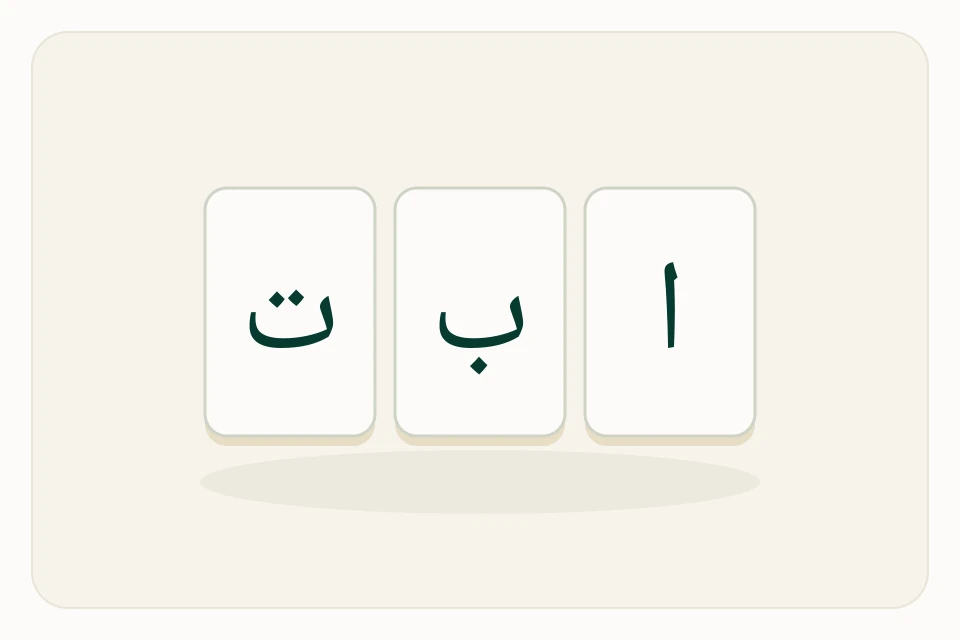
Recognize a letter, follow its joins, then add the vowels: this guide takes you from the Arabic alphabet to your first words. Use the chart as a reference and put it into practice with the examples and exercises.
By the end of this page, try to identify the letters in بَاب (door), بَيْت (house), and كِتَاب (book), then read the words slowly.
Arabic has no capital letters. A letter may change shape when it joins its neighbors: learn to recognize its outline and dots rather than memorizing each word as a picture.
A letter’s name is used to name it; it is not always the sound you pronounce in a word. For example, bāʾ is the name of ب, whereas بَ is pronounced ba. Transliterations are guides, not exact sound equivalents.
The joined forms below assume that the neighboring letter allows a join. The extended stroke shows the connection: it is neither a vowel nor an extra letter. On a small screen, scroll the chart horizontally.
| Isolated | Name | Initial | Medial | Final |
|---|---|---|---|---|
| ا | alif أَلِف | ا | ـا | ـا |
| ب | bāʾ بَاء | بـ | ـبـ | ـب |
| ت | tāʾ تَاء | تـ | ـتـ | ـت |
| ث | thāʾ ثَاء | ثـ | ـثـ | ـث |
| ج | jīm جِيم | جـ | ـجـ | ـج |
| ح | ḥāʾ حَاء | حـ | ـحـ | ـح |
| خ | khāʾ خَاء | خـ | ـخـ | ـخ |
| د | dāl دَال | د | ـد | ـد |
| ذ | dhāl ذَال | ذ | ـذ | ـذ |
| ر | rāʾ رَاء | ر | ـر | ـر |
| ز | zāy زَاي | ز | ـز | ـز |
| س | sīn سِين | سـ | ـسـ | ـس |
| ش | shīn شِين | شـ | ـشـ | ـش |
| ص | ṣād صَاد | صـ | ـصـ | ـص |
| ض | ḍād ضَاد | ضـ | ـضـ | ـض |
| ط | ṭāʾ طَاء | طـ | ـطـ | ـط |
| ظ | ẓāʾ ظَاء | ظـ | ـظـ | ـظ |
| ع | ʿayn عَيْن | عـ | ـعـ | ـع |
| غ | ghayn غَيْن | غـ | ـغـ | ـغ |
| ف | fāʾ فَاء | فـ | ـفـ | ـف |
| ق | qāf قَاف | قـ | ـقـ | ـق |
| ك | kāf كَاف | كـ | ـكـ | ـك |
| ل | lām لَام | لـ | ـلـ | ـل |
| م | mīm مِيم | مـ | ـمـ | ـم |
| ن | nūn نُون | نـ | ـنـ | ـن |
| ه | hāʾ هَاء | هـ | ـهـ | ـه |
| و | wāw وَاو | و | ـو | ـو |
| ي | yāʾ يَاء | يـ | ـيـ | ـي |
Remember: ا د ذ ر ز و never join to the left. Their appearance in the middle of a word therefore depends on the letter to their right.
Do not assume that letters that look alike sound alike. To practice the sounds, continue with the Arabic pronunciation guide.
Most letters can join to the preceding letter on the right and the following letter on the left. Four forms are commonly described: isolated, initial, medial, and final. But position alone is not enough: the letters must also allow the join.
In بَيْت (bayt), identify ب, then ي, then ت. The bāʾ is initial, the yāʾ medial, and the tāʾ final. All three letters are joined.
In بَاب (bāb), the first bāʾ joins to the alif. The alif does not join to the following bāʾ on the left. That bāʾ keeps its isolated form even though it ends the word. This break is not a space between two words.
When ل is followed by ا, they join to form لا. This ligature, called lām-alif, combines two letters: it does not add a twenty-ninth letter to the alphabet.
The dots that distinguish letters and the vowel marks serve different purposes. Texts for beginners often show the vowels; many everyday texts leave some or all of these marks out.
In the transliteration, u represents the sound [u].
Compare بَ / بَا (ba / bā), بِ / بِي (bi / bī) and بُ / بُو (bu / bū).
The line above the letters in ā, ī, ū indicates length. In these examples, alif, yāʾ, and wāw lengthen the vowel. Wāw and yāʾ can also represent the consonants w and y.
Learn more about sukūn and reading consonants without a following vowel with examples and exercises with answers.
بْ has a sukūn: it indicates that no vowel follows this consonant. In بِنْت (bint, girl), the nūn has this mark. Do not add a vowel between n and t.
Practice with the lesson on shadda and doubled consonants.
بّ has a shadda: the consonant is doubled. In أُمّ (umm, mother), hold the m. Shadda can appear with a vowel mark; it is not itself a vowel.
Tanwīn is written with the doubled marks ـٌ ـٍ ـً, pronounced -un, -in, -an in connected speech. Compare كِتَابٌ (kitābun), كِتَابٍ (kitābin) and كِتَابًا (kitāban). The final n is pronounced without a written letter nūn.
These endings depend on grammar, and their pronunciation changes at a pause. For now, learn to recognize the marks without trying to master every ending. The isolated words in our first examples are shown without final grammatical endings.
Alif and hamza are not interchangeable. In بَاب, the alif forms part of the long vowel ā. Hamza represents a glottal stop, a brief closure of the airflow at the larynx.
Hamza can be written on its own ء or on a carrier: أ إ ؤ ئ. In أَب (ʾab, father) and إِبْرَة (ʾibra, needle), it appears above or below an alif. The choice of carrier follows spelling rules you can learn later.
Two other forms to recognize: ة is tāʾ marbūṭa, commonly found at the end of nouns and adjectives; ى is alif maqṣūra, which can represent a long ā at the end of a word. Do not confuse it with ي, which has two dots in the script shown here.
You can spread these steps over short sessions. Aim to read accurately before you try to read quickly. To practice with everyday words, explore the Arabic vocabulary by topic, especially the lessons on house, door and book.
Try without looking at the chart, then open each answer.
Which letter has one dot below it? ت ب ث
ب : bāʾ. Tāʾ ت has two dots above it, and thāʾ ث has three.
Identify the four letters in كِتَاب, from right to left. Which letter prevents the final join?
Kāf ك, tāʾ ت, alif ا, bāʾ ب. Alif does not join to the bāʾ that follows it on the left. The word is read as kitāb and means “book.”
Which of these two spellings contains a long vowel: بِ or بِي ?
بِي is pronounced bī, with a long vowel. بِ is pronounced bi, with a short vowel. The yāʾ in the first example lengthens the sound.
Which mark doubles a consonant in أُمّ ? Which mark indicates that no vowel follows the nūn in بِنْت ?
The shadda doubles the mīm in أُمّ (umm). The sukūn on nūn indicates that no vowel follows this consonant in بِنْت (bint).
The Arabic alphabet is generally presented as 28 letters. Short vowels and marks such as sukūn and shadda are additional signs. Hamza is also studied separately to understand how it is written.
You need to recognize the joined forms, but they are not new letters. The form depends on the position and the joins possible with neighboring letters. The six letters ا د ذ ر ز و do not join to the following letter on the left.
Yes. Experienced readers use their vocabulary and knowledge of grammar to read texts without vowel marks. Beginners are better off practicing with vowel marks, then covering them in familiar words.
Alif ا is a letter that can represent a long vowel ā or serve as a carrier for a hamza. Hamza ء represents a glottal stop. In أ and إ, the hamza appears above or below an alif.
Start by recognizing a few isolated letters and their dots. Add their joined forms, then the three short vowels. Next, move on to short words with vowel marks and check your reading against each word’s meaning.
Review the sounds and vowel length in the pronunciation guide, then choose a few words from the Arabic vocabulary guide to put your new knowledge into practice.