
The human body in Arabic: hand, eye and head
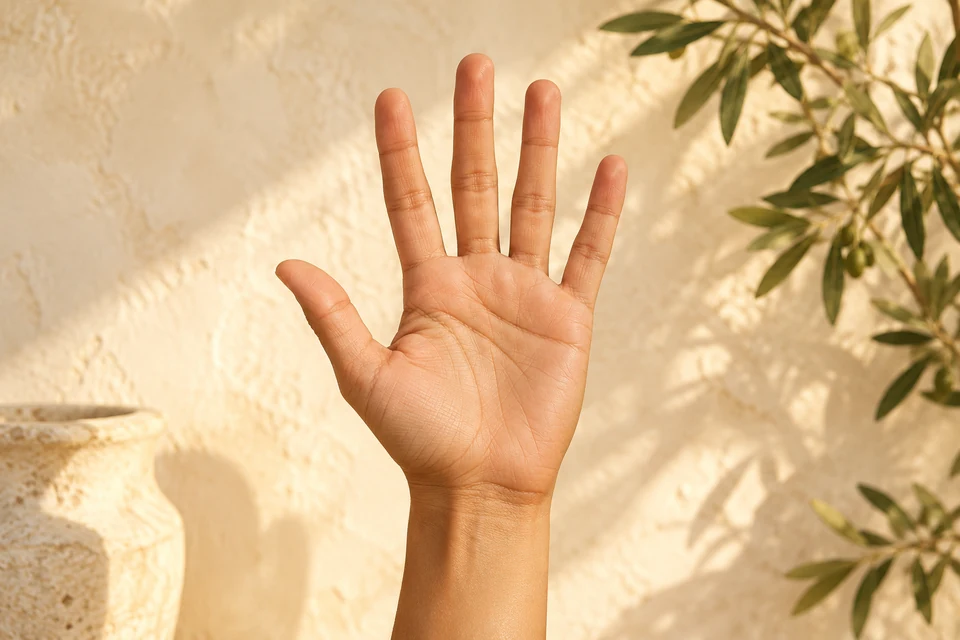
To name body parts in Arabic, start with three familiar words: يَد (yad) for hand, عَيْن (ʿayn) for eye and رَأْس (raʾs) for head. This guide helps you move from isolated words to “my hand”, “my two eyes” and “I raise my head”.
Isolated words are shown without final grammatical endings. The sentence examples retain their written grammatical endings. The linked guides explain each word’s pronunciation, forms and uses in detail.
Essential vocabulary
| Translation | Arabic | Reading | Key points |
|---|---|---|---|
| Hand in Arabic | يَد | yad | Feminine; two hands: yadāni |
| Eye in Arabic | عَيْن | ʿayn | Feminine; plural: ʿuyūn |
| Head in Arabic | رَأْس | raʾs | Masculine; plural: ruʾūs |
Three words, two genders to remember
Learn grammatical gender with each noun: head is masculine in Arabic, while hand and eye are feminine. Learn each word with its demonstrative: هَذِهِ يَد (hādhihi yad) (“this is a hand”), هَذِهِ عَيْن (hādhihi ʿayn) (“this is an eye”), but هَذَا رَأْس (hādhā raʾs) (“this is a head”). The absence of ة does not necessarily mean a word is masculine.
Two hands, two eyes: the role of the dual
Standard Arabic has a special form for two: يَدَانِ (yadāni) and عَيْنَانِ (ʿaynāni) in the nominative. As an object or after a preposition, these forms become يَدَيْنِ (yadayni) and عَيْنَيْنِ (ʿaynayni). The plural remains useful when talking about hands or eyes in general. You do not need to memorise every case form at once: start with a sentence containing the dual.
Saying my hand, my eye, my head
Possession is often marked by a suffix attached to the noun. With -ī, you get يَدِي (yadī), عَيْنِي (ʿaynī) and رَأْسِي (raʾsī). The same suffix is used with masculine and feminine nouns. Pay attention to number: عَيْنِي means “my eye”, whereas عَيْنَايَ means “my two eyes” in the nominative.
Related words not to confuse
A hand is not an arm: arm is ذِرَاع (dhirāʿ). The head is not just the face: face is وَجْه (wajh). These distinctions help you describe a person or a movement precisely. To expand your vocabulary, add one related word after learning the three main ones.
An exercise with gestures
Point to a hand, an eye and your head in turn. Say the Arabic word, then add the suffix for “my”. Next, cover the words and recall their gender. Finish with an action: أَرْفَعُ رَأْسِي (arfaʿu raʾsī) (“I raise my head”). Repeat without looking: let the gesture prompt the word.
Check your understanding
Complete the sentence: does “this is my head” begin with hādhā or hādhihi? Which suffix means “my”?
Show the answers
هَذَا رَأْسِي (hādhā raʾsī); the suffix is -ī.
Frequently asked questions
Should I learn all the plurals straight away?
Start with the singular, the gender and one sentence. Then add two hands and two eyes, followed by the plurals in the detailed guides. This helps avoid confusion between number and possession.
Do these words belong to a dialect?
The forms shown are literary Arabic. Dialects may change the pronunciation, for example of the word for head. The guides highlight useful distinctions without mixing registers.