
A word in detail • Modern Standard Arabic
Orange in Arabic: fruit, pronunciation, plural and colour
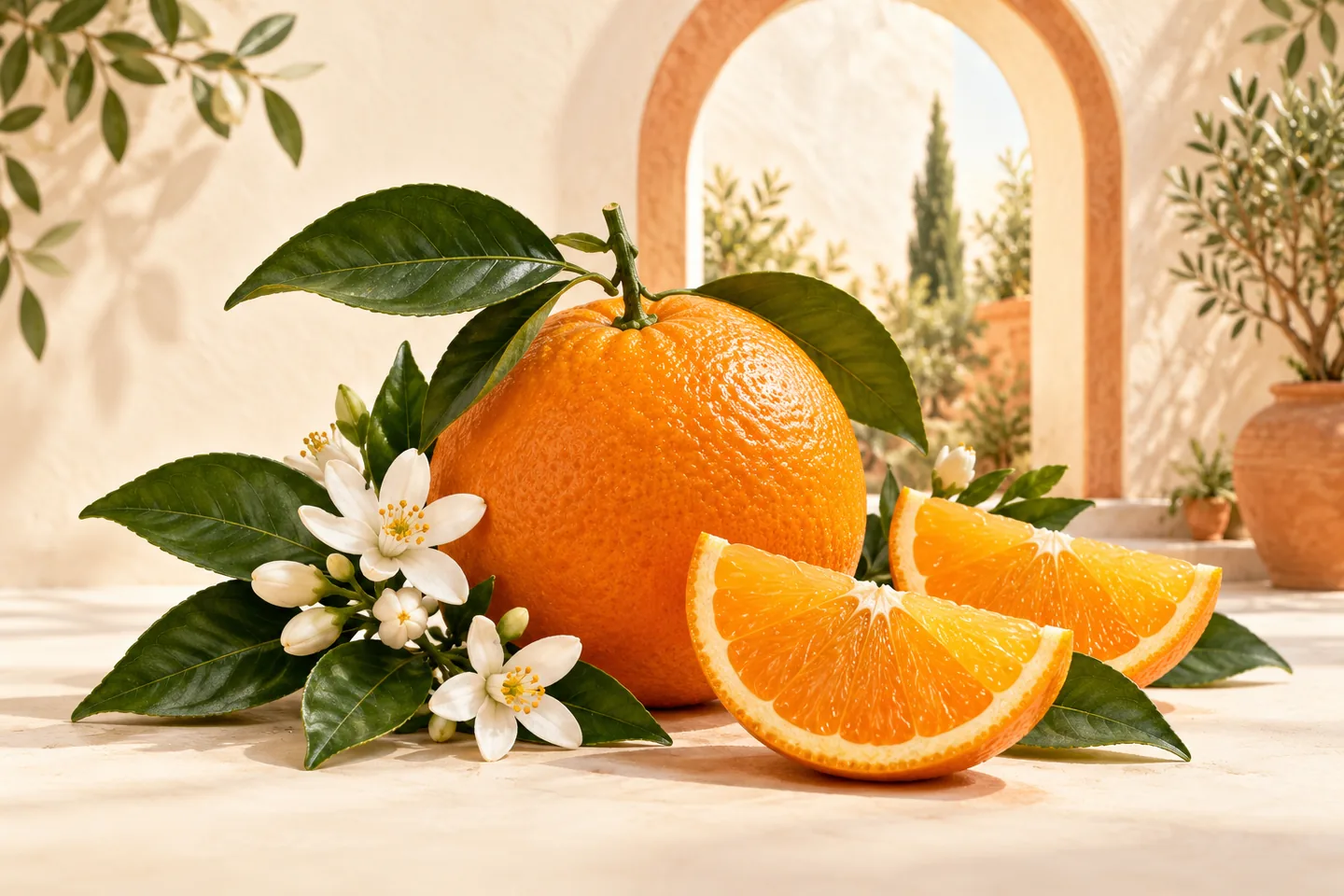
For the fruit, “orange” is بُرْتُقَال (burtuqāl) in Standard Arabic. A single orange is بُرْتُقَالَة (burtuqāla). For the colour orange, use بُرْتُقَالِيّ (burtuqāliyy) in the masculine and بُرْتُقَالِيَّة (burtuqāliyya) in the feminine.
These words look similar, but they are not interchangeable. Here is how to choose the right form, read the letters and use the word in a sentence.
Which translation should you choose for “orange”?
| What you want to say | Arabic | Transliteration |
|---|---|---|
| Orange as a fruit / oranges collectively | بُرْتُقَال | burtuqāl |
| One orange | بُرْتُقَالَة | burtuqāla |
| Orange, masculine adjective | بُرْتُقَالِيّ | burtuqāliyy |
| Orange, feminine adjective | بُرْتُقَالِيَّة | burtuqāliyya |
To distinguish the fruit from its colour in Arabic, the suffix ـِيّ distinguishes the adjective from the fruit noun here. To name the colour, you can say اللَّوْن الْبُرْتُقَالِيّ, “the colour orange”.
How do you pronounce burtuqāl?
Break the word into three parts: bur-tu-qāl. Keep the vowels in the first two syllables short. The final “a” is long: do not give every vowel the same length.
- The two u of burtuqāl represent vowels pronounced with the tongue raised towards the back of the mouth and the lips rounded.
- The sound q corresponds to ق : it is pronounced further back in the mouth than ك (k).
- The sound r corresponds to ر : it is made with the tip of the tongue, with a tap or a trill.
- For a single orange, add the final syllable: bur-tu-qā-la.
The transliteration burtuqāla represents a common pronunciation of the isolated word. In connected reading with grammatical endings, the final letter ة can be heard as a “t”, followed by the appropriate ending. This is why you may encounter burtuqālatun in a fully vowelled lesson.
Writing the word with or without vowel marks
With vowel marks: بُرْتُقَال. Without short-vowel marks: برتقال. Both spellings represent the same word; the alif ا that marks the long vowel remains written.
The letters, in right-to-left reading order, are ب (bāʾ), ر (rāʾ), ت (tāʾ), ق (qāf), ا (alif) and ل (lām). The visual break after ر or ا does not mark a space between two words: these letters do not join to the next letter in the reading direction.
To review these features, see the letters of the Arabic alphabet and the guide to Arabic pronunciation.
One orange, several oranges: singular, collective and plural
بُرْتُقَال is the collective noun, used to talk about oranges in general. بُرْتُقَالَة refers to a single item. Its countable plural is بُرْتُقَالَات (burtuqālāt), useful for several oranges considered as individual fruits.
- أُحِبُّ الْبُرْتُقَالَ.
I like oranges. The fruit is referred to collectively. - هَذِهِ بُرْتُقَالَةٌ.
This is an orange. One fruit is being pointed out. - ثَلَاثُ بُرْتُقَالَاتٍ
Three oranges. The fruits are being counted.
The choice of form therefore depends on meaning and quantity. First ask whether you mean the fruit in general, one orange or a number of fruits. In “three oranges”, the noun ending is part of the grammatical construction; you cannot replace the number with any other number without checking the rule.
Orange juice, a sweet orange and the colour orange
How do you say “orange juice”?
عَصِير بُرْتُقَال (ʿaṣīr burtuqāl) means “orange juice”. The first word names the juice; the second specifies the fruit. You will also encounter the form with the article: عَصِير الْبُرْتُقَال.
أُرِيدُ عَصِيرَ بُرْتُقَالٍ.
I would like some orange juice.
Describing an orange
هَذِهِ بُرْتُقَالَةٌ حُلْوَةٌ.
This is a sweet orange.
حُلْوَة (ḥulwa) is feminine, like بُرْتُقَالَة. Similarly, بُرْتُقَالَةٌ حَامِضَةٌ means “a sour orange”, and بُرْتُقَالَةٌ نَاضِجَةٌ, “a ripe orange”.
Using the colour adjective
- قَمِيصٌ بُرْتُقَالِيٌّ
An orange shirt: the Arabic word for “shirt” is masculine. - حَقِيبَةٌ بُرْتُقَالِيَّةٌ
An orange bag: the Arabic word for “bag” is feminine.
Agreement follows the Arabic noun’s grammatical gender. In بُرْتُقَالَةٌ بُرْتُقَالِيَّةٌ, “an orange-coloured orange”, the first word names the fruit and the second its colour.
The sentences are original learning examples. Word endings are included for connected grammatical reading; the table forms are given without these endings.
Is burtuqāl also used in dialects?
This guide uses Standard Arabic as its reference. In Desert Sky’s Egyptian Arabic vocabulary, orange appears as برتقان, burtuʾān, with a pronunciation that differs from the standard word. This is a dialectal variant, not an Arabic mistake.
This single form does not represent usage across the whole Arabic-speaking world. To speak in a particular country, learn the word and the complete phrase in the relevant dialect. To read or follow a literary Arabic course, keep بُرْتُقَال as your reference.
Frequently asked questions
Do bourtouqal and burtuqāl refer to the same word?
Yes. “Bourtouqal” follows a different transliteration convention; burtuqāl is the transliteration used here, with u for the short rounded vowel and ā for the long “a”. The reference Arabic spelling remains بُرْتُقَال.
Why do I sometimes see burtuqalah?
Transliteration conventions for ة vary: some use “a”, others “ah”. On this page, burtuqāla is used as a guide to the isolated word. The form with “t” occurs particularly in connected reading with grammatical endings.
Can burtuqāl be used for the colour?
In the standard usage taught here, use the adjective بُرْتُقَالِيّ or بُرْتُقَالِيَّة to describe a colour. The noun بُرْتُقَال refers to the fruit.
What should I remember first?
Match three ideas to three forms: the fruit, burtuqāl ; one orange, burtuqāla ; the masculine colour adjective, burtuqāliyy. Then use “orange juice” in a sentence.
Learning more fruit names
Find apple, lemon, grapes, date and other words in the Arabic fruit table. To explore another topic, return to Arabic vocabulary by topic.