
Abaya in Arabic: عَبَاءَة, plural and pronunciation
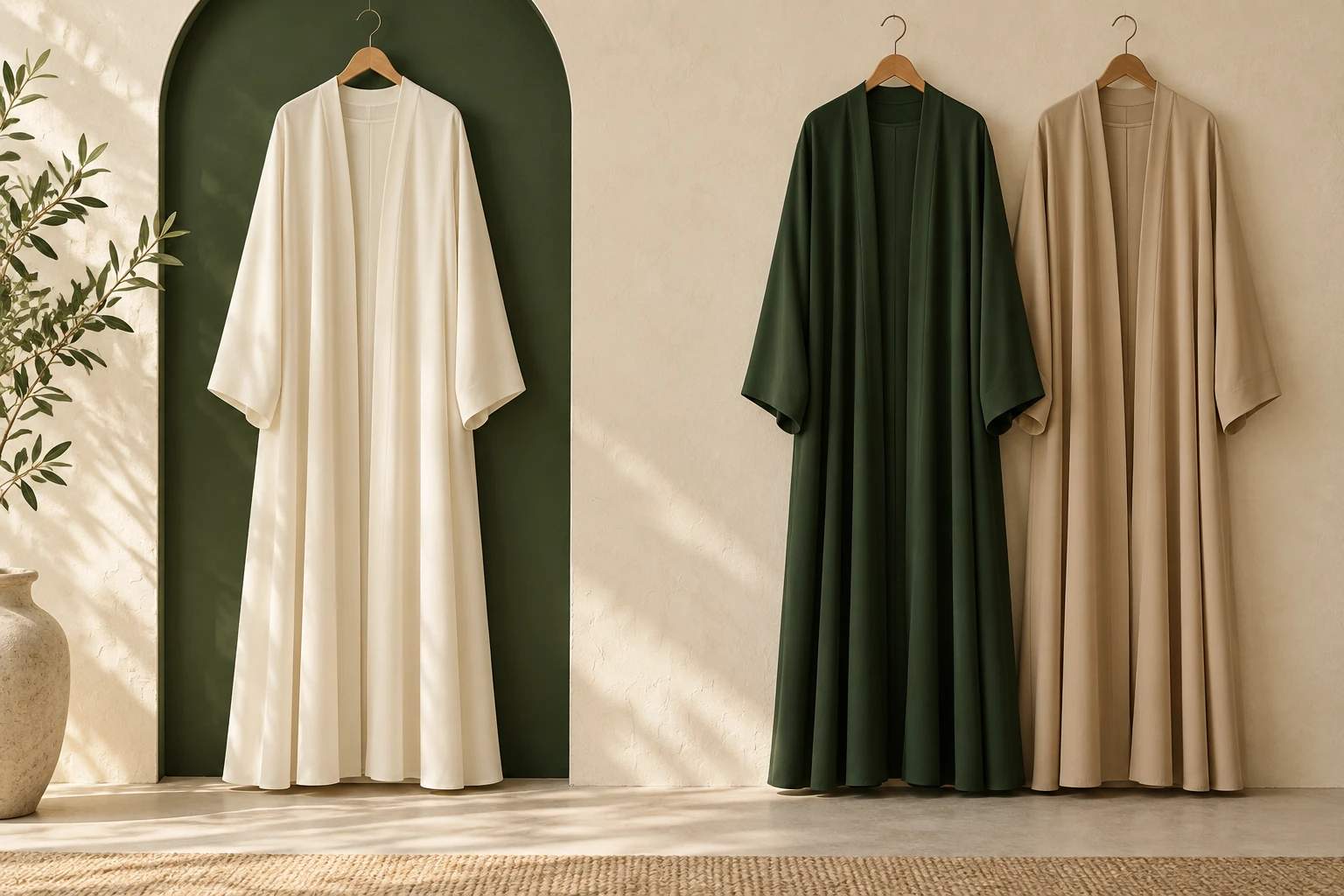
In Modern Standard Arabic, abaya is written عَبَاءَة (ʿabāʾa). A common plural is عَبَاءَات (ʿabāʾāt). The noun is feminine: هَذِهِ عَبَاءَةٌ جَدِيدَةٌ means “This is a new abaya.” Learn the spelling with the hamza ء, then explore the variant عَبَايَة and useful sentences for describing the garment or asking for a size.
Abaya: singular, plural and possessive
The basic form is عَبَاءَة. Adding the article الـ gives الْعَبَاءَة, “the abaya”. The isolated words below appear without final case endings; their transliteration follows pronunciation at a pause.
| Meaning | Arabic | Pronunciation |
|---|---|---|
| An abaya | عَبَاءَة | ʿabāʾa |
| Abayas | عَبَاءَات | ʿabāʾāt |
| The abaya | الْعَبَاءَة | al-ʿabāʾa |
| My abaya | عَبَاءَتِي | ʿabāʾatī |
Pronouncing ʿabāʾa: do not miss the hamza
The symbol ʿ represents ع, a sound made in the throat. The ā marks a long vowel. The symbol ʾ represents the hamza ء: a brief interruption of the voice after ā. The transliteration ʿabāʾa therefore distinguishes sounds that the familiar spelling “abaya” does not show.
At a pause, the ending ة is generally pronounced -a. Before the possessive suffix ي, it becomes ت: عَبَاءَتِي, ʿabāʾatī. In the plural عَبَاءَات, remember the final long ā followed by t.
A feminine noun and a non-human plural
In the singular, عَبَاءَة takes feminine agreement: عَبَاءَةٌ طَوِيلَةٌ, “a long abaya”. The demonstrative is هَذِهِ, not هَذَا. Grammatical gender concerns the noun, not the person wearing the garment.
In Standard Arabic, a plural that does not refer to people generally takes feminine singular agreement. Thus هَذِهِ عَبَاءَاتٌ جَدِيدَةٌ means “These are new abayas.” جَدِيدَةٌ remains feminine singular even though several garments are meant.
عباءة, عباية and فستان: keeping the words distinct
Dictionaries also record عَبَايَة (ʿabāya). This variant should therefore not automatically be corrected as a mistake. To give beginners one consistent form to learn, this lesson focuses on عَبَاءَة and its plural عَبَاءَات.
The traditional meaning of عَبَاءَة is a loose outer garment. Its uses should not all be reduced to a single modern design. For “dress”, learn فُسْتَان (fustān). An abaya can be worn over other clothes, so the two nouns are not interchangeable translations.
Sentences for describing an abaya or asking for a size
These examples were written for this lesson. The fully vocalised sentences and their transliterations show grammatical endings, which are not always pronounced at a pause.
| Arabic | Meaning |
|---|---|
| هَذِهِ عَبَاءَةٌ جَدِيدَةٌ. hādhihi ʿabāʾatun jadīdatun | This is a new abaya. |
| أُرِيدُ عَبَاءَةً طَوِيلَةً. urīdu ʿabāʾatan ṭawīlatan | I would like a long abaya. |
| هَذِهِ عَبَاءَاتٌ جَدِيدَةٌ. hādhihi ʿabāʾātun jadīdatun | These are new abayas. |
| عَبَاءَتِي وَاسِعَةٌ. ʿabāʾatī wāsiʿatun | My abaya is loose-fitting. |
| هَلْ يُوجَدُ مَقَاسٌ أَصْغَرُ؟ hal yūjadu maqāsun aṣgharu | Is there a smaller size? |
A short review exercise
Without looking at the table, write the plural of عَبَاءَة, then translate “my abaya”. Next, complete هَذِهِ عَبَاءَةٌ … to say “This is a long abaya.”
Answers: عَبَاءَات; عَبَاءَتِي; طَوِيلَةٌ. Remember to keep the hamza in the singular, plural and possessive.
Frequently asked questions
How do you write abaya in Arabic?
Write عَبَاءَة (ʿabāʾa), or عباءة without the short-vowel marks. The ء after ا is a hamza: it is part of the word and should not be omitted.
What is the Arabic plural of abaya?
A common plural of عَبَاءَة is عَبَاءَات (ʿabāʾāt). This is a sound feminine plural: the ending ة becomes ات. For “new abayas”, say عَبَاءَاتٌ جَدِيدَةٌ.
Is abaya masculine or feminine in Arabic?
عَبَاءَة is feminine. Use هَذِهِ and a feminine adjective: هَذِهِ عَبَاءَةٌ طَوِيلَةٌ means “This is a long abaya.”
What is the difference between عباءة and عباية?
عَبَاءَة (ʿabāʾa) is the form taught here. عَبَايَة (ʿabāya) is another form recorded in dictionaries; it should not be treated as a spelling mistake. The hamza in the first form corresponds to a y in the second.
How do you say my abaya in Arabic?
“My abaya” is عَبَاءَتِي (ʿabāʾatī). Before the possessive suffix ي, the ending ة becomes ت and is pronounced t. For example, عَبَاءَتِي وَاسِعَةٌ means “My abaya is loose-fitting.”
Are abaya and dress the same word in Arabic?
No. عَبَاءَة denotes an abaya or a loose outer garment, depending on context. فُسْتَان (fustān) is the word to learn for a dress. Keeping the distinction helps you describe clothing accurately.
Continue learning clothes in Arabic
Learn the distinction between an abaya and a dress, then explore more clothing in the topic guide. The Vocabulary hub helps you choose another subject.
Linguistic sources
Forms and nuances were checked against the Cairo Arabic Language Academy’s dictionary and Ahmad Mukhtar Umar’s Dictionary of Contemporary Arabic, reproduced by Arabdict. The example sentences were written specifically for this lesson.