
A word in detail • Modern Standard Arabic
Apple in Arabic: tuffāḥ, spelling and examples
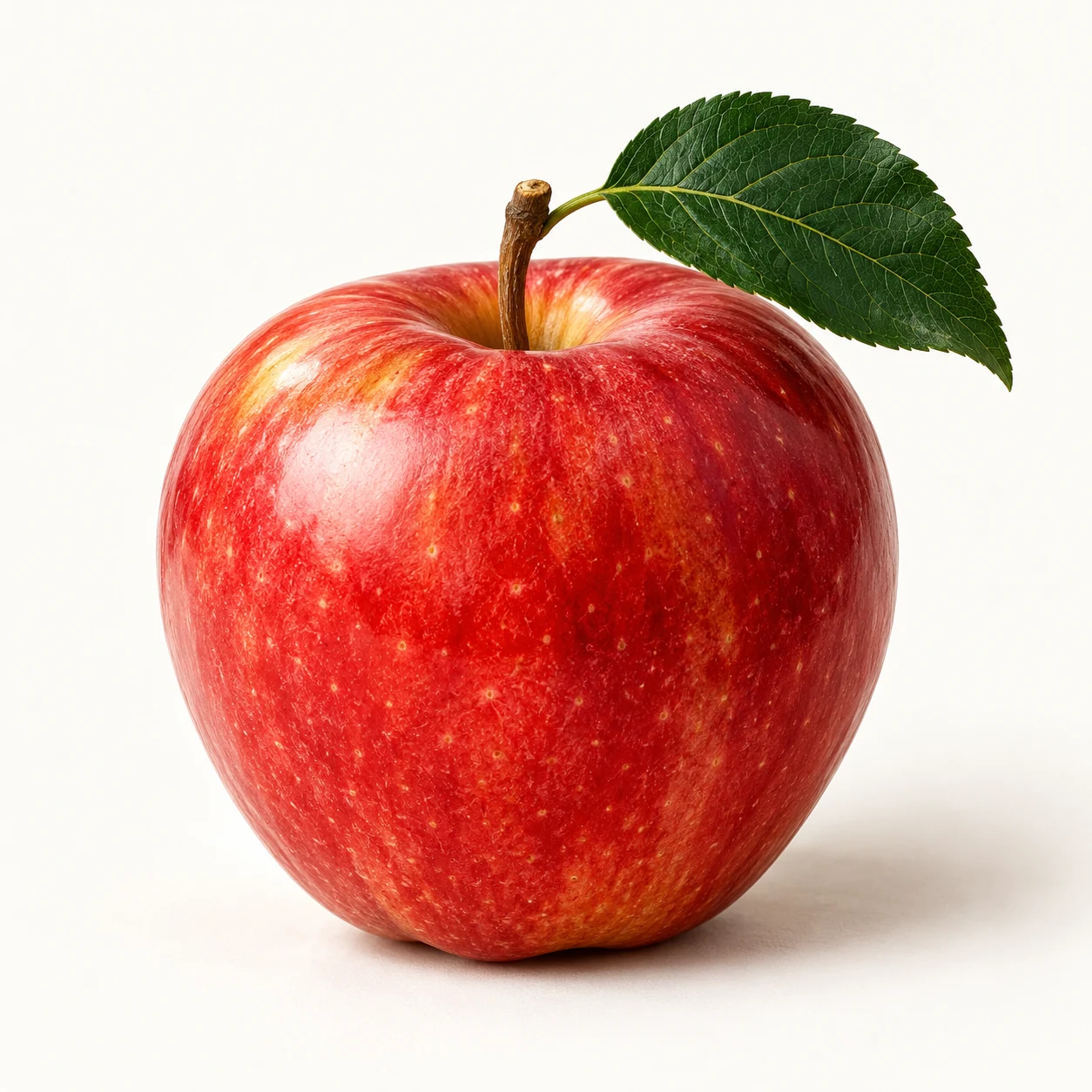
“Apple” is تُفَّاح (tuffāḥ) when referring to the fruit in general. For one apple, say تُفَّاحَة (tuffāḥa). To count several apples, you can use تُفَّاحَات (tuffāḥāt).
This word is a useful exercise for learning three features of Arabic reading: a doubled consonant, a long vowel and the sound ح, which needs separate practice.
How do you pronounce tuffāḥ?
Break down tuffāḥ into tuf-fāḥ. The u represents a vowel pronounced with the tongue raised towards the back of the mouth and the lips rounded; the ā is a long “a”, and the double f is pronounced by holding the consonant longer. The transliteration distinguishes the long vowel from the final consonant.
The ح at the end, transliterated as ḥ, is a breathy sound produced in the throat. Do not turn it into خ (kh), which produces a different friction sound, or ه (h), which is lighter. See the guide to Arabic pronunciation to distinguish these letters.
In tuffāḥa, the final syllable marks the form for a single apple. The final “a” is not the same as the long ā before ḥ.
Writing apple in Arabic, with and without vowel marks
The vowelled form is تُفَّاح ; without short-vowel marks, it is written تفاح. The word contains four letters: ت, ف, ا and ح. The mark ّ placed on ف is a shadda: it indicates that the consonant is doubled without writing two separate letters.
For a single apple, use the unit form: تُفَّاحَة. The final letter is a tāʾ marbūṭa, ة. We write it as “a” in our transliteration of the isolated word, but it can be pronounced “t” in connected reading with an ending.
Tuffāḥ, tuffāḥa, tuffāḥāt: what is the difference?
- تُفَّاح : the fruit, or apples collectively.
- تُفَّاحَة : one apple, considered as a single item.
- تُفَّاحَات : individual apples, particularly when counting them.
أُحِبُّ التُّفَّاحَ.
I like apples.
هَذِهِ تُفَّاحَةٌ.
This is an apple.
ثَلَاثُ تُفَّاحَاتٍ
Three apples.
The collective noun is therefore not an incorrect singular: it serves a different purpose. Several fruits follow this pattern, but it is not a universal rule for all Arabic nouns.
How do you say a red or green apple?
With تُفَّاحَة, use a feminine adjective: تُفَّاحَةٌ حَمْرَاءُ means “a red apple” and تُفَّاحَةٌ خَضْرَاءُ, “a green apple”.
It is not always enough to add ة to a colour’s masculine form. Here, أَحْمَر (“red”, masculine) becomes حَمْرَاء in the feminine; أَخْضَر (“green”, masculine) becomes خَضْرَاء. Learning the complete pair helps you avoid inventing an incorrect form.
For taste, تُفَّاحَةٌ حُلْوَةٌ means “a sweet apple” and تُفَّاحَةٌ حَامِضَةٌ, “a sour apple”.
Two expressions to use
- عَصِير تُفَّاح (ʿaṣīr tuffāḥ): apple juice.
- فَطِيرَة تُفَّاح (faṭīrat tuffāḥ): apple pie.
In the second expression, the end of the first word is pronounced “t”: the two nouns form a linked construction. Arabic expresses the relationship between them through a genitive construction, without a separate preposition.
Frequently asked questions
Why is the article pronounced at- in at-tuffāḥ?
The article الـ is always written with a lām, but before ت, its pronunciation assimilates to the following consonant: التُّفَّاح, at-tuffāḥ. This is a so-called sun letter.
Is “touffah” another variety of apple?
No: it is simply a different transliteration convention for the same word. Our spelling tuffāḥ makes the long vowel and the consonant clear: ح.
What short exercise can I do?
Write تفاح, add the vowel marks, then change the word to refer to one apple. Finally, say whether the apple is red or green using the examples in this guide.
Continue with fruit in Arabic
Compare this word with orange in Arabic, then review the fruit table. See the Arabic vocabulary by topic page to choose what to learn next.