Sock in Arabic: جَوْرَب, plural and a pair
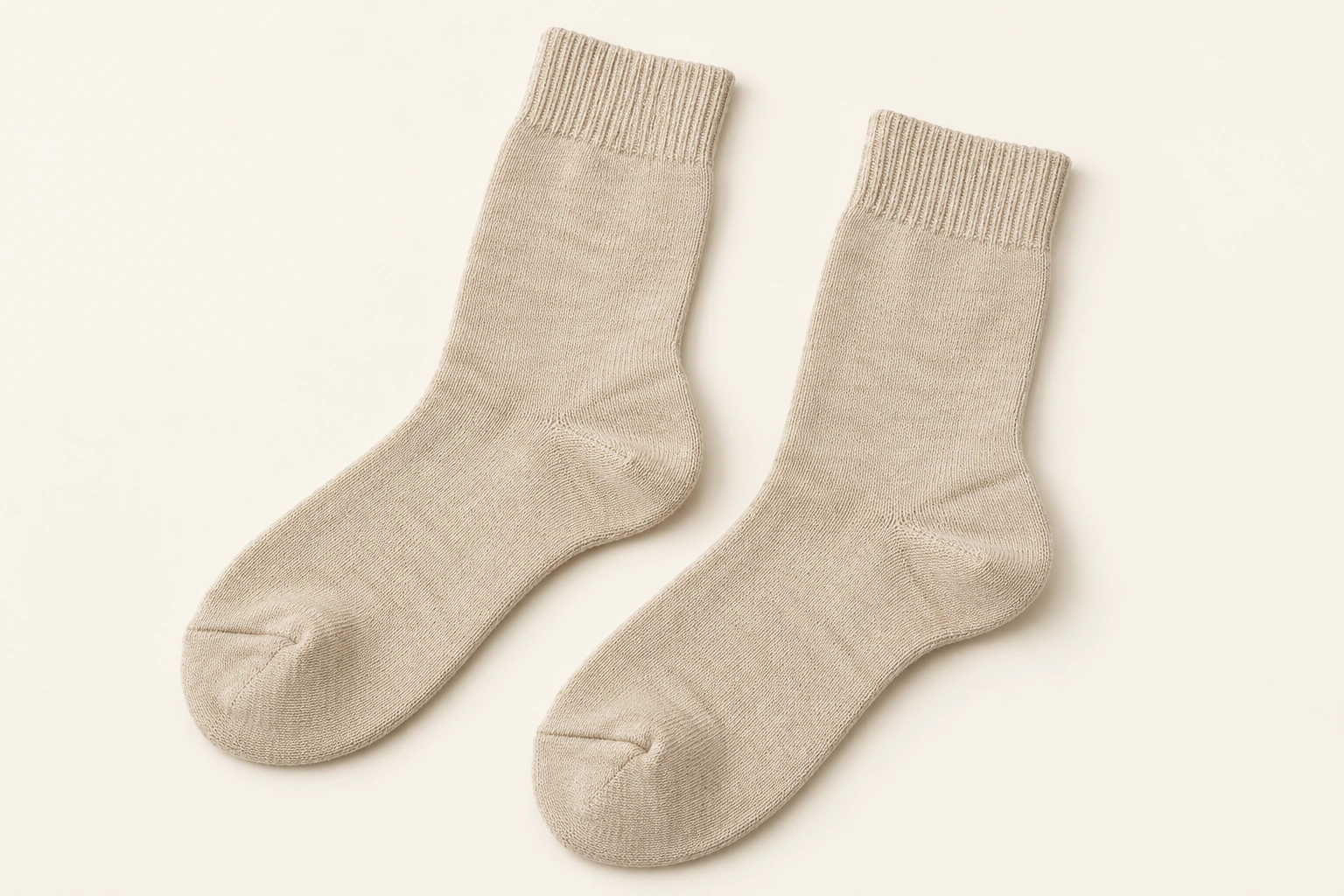
“Sock” is جَوْرَب (jawrab) in Modern Standard Arabic. The plural is جَوَارِب (jawārib), “socks”. The Arabic noun is masculine. This lesson helps you distinguish one sock, two socks and a pair, then describe their length, material or colour using fully vowelled examples.
One sock, socks and my socks
Learn the singular and plural together: jawrab becomes jawārib. This is a broken plural because the vowels and internal structure change. Simply adding an ending to the singular will not work. The table gives vocabulary forms in pause, without the case endings used in complete sentences. The suffix -ī means “my”, but it does not replace the distinction between singular and plural.
| Meaning | Arabic | Pronunciation |
|---|---|---|
| A sock | جَوْرَب | jawrab |
| Socks | جَوَارِب | jawārib |
| The sock | الْجَوْرَب | al-jawrab |
| The socks | الْجَوَارِب | al-jawārib |
| My sock | جَوْرَبِي | jawrabī |
| My socks | جَوَارِبِي | jawāribī |
Pronouncing jawrab and jawārib
In jawrab, aw is a diphthong: a glides towards w rather than becoming a long ū. Divide the word as jaw–rab. In jawārib, say ja–wā–rib: ā is long and the following i is short. Here j represents the sound in English “jam”, using the standard pronunciation adopted for this lesson.
With the article, say al-jawrab and al-jawārib. The letter ج is a moon letter, so the article’s l remains audible. Do not double j. Transliterations below the examples retain the written grammatical endings to make comparison with Arabic easier; some endings can be omitted when pausing.
Two socks or a pair: telling them apart
Arabic has a dual form for exactly two items. For two socks, the nominative is jawrabāni; the accusative and genitive are jawrabayni. The second form appears after “I want” in the example. These forms count socks; on their own, they do not say whether the socks match.
To name a pair explicitly, you can use زَوْجٌ مِنَ الْجَوَارِبِ (zawjun mina l-jawāribi). Here zawj names the pair and jawārib identifies the items. Learn the whole expression first to avoid confusing a pair of socks with a single sock.
| Arabic | Meaning |
|---|---|
| هَذَانِ جَوْرَبَانِ. hādhāni jawrabāni. | These are two socks. |
| أُرِيدُ جَوْرَبَيْنِ. urīdu jawrabayni. | I want two socks. |
| أُرِيدُ زَوْجًا مِنَ الْجَوَارِبِ. urīdu zawjan mina l-jawāribi. | I want a pair of socks. |
Masculine singular, feminine agreement in the plural
Jawrab is masculine: use hādhā for “this” and jadīd for “new” with one sock. In Modern Standard Arabic, non-human plurals normally take feminine singular agreement. With jawārib, therefore, use hādhihi and jadīda. This agreement does not turn the plural into a single sock. The dual keeps its own agreement, so do not apply this plural rule to it.
Jawāribu ends in -u rather than -un: this plural is diptote and has no tanwīn. In the examples below, the feminine adjective jadīdatun does have tanwīn. Two words in the same phrase therefore need not have identical endings.
| Arabic | Meaning |
|---|---|
| هَذَا جَوْرَبٌ جَدِيدٌ. hādhā jawrabun jadīdun. | This is a new sock. |
| هَذِهِ جَوَارِبُ جَدِيدَةٌ. hādhihi jawāribu jadīdatun. | These are new socks. |
| هَذَانِ جَوْرَبَانِ جَدِيدَانِ. hādhāni jawrabāni jadīdāni. | These are two new socks. |
Describing length, material and colour
Start with one adjective: long, short, cotton or black. Compare the first phrase, in the masculine singular, with the others, which use feminine singular adjectives after plural jawārib. These phrases name types of socks; they are not yet full sentences such as “my socks are black”. Choose one feature, then change it as you learn more vocabulary.
| Arabic | Meaning |
|---|---|
| جَوْرَبٌ طَوِيلٌ jawrabun ṭawīlun | A long sock |
| جَوَارِبُ طَوِيلَةٌ jawāribu ṭawīlatun | Long socks |
| جَوَارِبُ قَصِيرَةٌ jawāribu qaṣīratun | Short socks |
| جَوَارِبُ قُطْنِيَّةٌ jawāribu quṭniyyatun | Cotton socks |
| جَوَارِبُ سَوْدَاءُ jawāribu sawdāʾu | Black socks |
Wearing, finding and asking for socks
The first-person sentences work regardless of the speaker’s gender. After urīdu, “I want”, the object is accusative: jawāriba quṭniyyatan. In “I wear my socks”, jawāribī contains the possessive suffix. Keep that suffix in the question with ayna, “where”, when asking about your own socks.
| Arabic | Meaning |
|---|---|
| أُرِيدُ جَوَارِبَ قُطْنِيَّةً. urīdu jawāriba quṭniyyatan. | I want cotton socks. |
| أَلْبَسُ جَوَارِبِي. albasu jawāribī. | I wear my socks. |
| أَيْنَ جَوَارِبِي؟ ayna jawāribī? | Where are my socks? |
| هَذَا الْجَوْرَبُ قَصِيرٌ. hādhā l-jawrabu qaṣīrun. | This sock is short. |
A short exercise to remember the word
Cover the table and say “a sock”, “socks” and “my socks” in turn. Next, point to two socks and choose the dual form rather than the plural. Finally, change “this is a new sock” into “these are new socks”: the demonstrative, noun and adjective all change. Check each item against the examples, then try again without looking.
Continuez à pratiquer
Un mot appris, une nouvelle occasion de pratiquer l’arabe
Apprendre à lire et écrire l’arabe en 30 jours
Après avoir révisé le mot « chaussette » et ses formes dans cette fiche, continuez à travailler la lecture et l’écriture de l’arabe. Le cahier de l’auteur du site, en français pour les débutants francophones, propose l’alphabet, de l’écriture guidée et du vocabulaire courant, avec des exercices et leurs corrigés.
Lien affilié Amazon · livre de l’auteur de Mot-Arabe.
Voir sur AmazonBuild your practice
Turn your next Arabic word into writing practice
Apprendre à lire et écrire l’arabe en 30 jours
After reviewing “sock” and its Arabic forms in this lesson, keep practising Arabic reading and writing. This French-language workbook by the site’s author is intended for French-speaking beginners and covers the alphabet, guided writing and everyday vocabulary, with exercises and answers.
Amazon affiliate link · book by the author of Mot-Arabe.
View on AmazonWort für Wort
Ein neues Wort als Anlass zum Schreiben nutzen
Apprendre à lire et écrire l’arabe en 30 jours
Nachdem Sie das Wort für „Socke“ und seine arabischen Formen in dieser Lektion geübt haben, können Sie das Lesen und Schreiben weiter vertiefen. Das französischsprachige Arbeitsbuch des Website-Autors richtet sich an Anfänger mit Französischkenntnissen und bietet Alphabet, angeleitetes Schreiben und Alltagswortschatz mit Übungen und Lösungen.
Amazon-Affiliate-Link · Buch vom Autor von Mot-Arabe.
Auf Amazon ansehenPalabra a palabra
Una palabra nueva para seguir practicando la escritura árabe
Apprendre à lire et écrire l’arabe en 30 jours
Después de repasar «calcetín» y sus formas árabes en esta lección, sigue practicando la lectura y la escritura árabes. El cuaderno en francés del autor de esta web está dirigido a principiantes francófonos y ofrece alfabeto, escritura guiada y vocabulario cotidiano, con ejercicios y soluciones.
Enlace de afiliado de Amazon · libro del autor de Mot-Arabe.
Ver en AmazonFrequently asked questions
How do you say sock in Arabic?
A sock is جَوْرَب (jawrab) in Modern Standard Arabic. The Arabic noun is masculine.
What is the plural of sock in Arabic?
The plural is جَوَارِب (jawārib). It is a broken plural: the internal structure of singular jawrab changes.
How do you pronounce jawrab with the article?
Say الْجَوْرَب (al-jawrab). Here j is the sound in “jam”, and the Arabic letter is a moon letter: the article’s l is pronounced.
How do you say two socks in Arabic?
The dual is جَوْرَبَانِ (jawrabāni) in the nominative and جَوْرَبَيْنِ (jawrabayni) in the accusative or genitive. It means exactly two socks.
How do you say a pair of socks?
You can say زَوْجٌ مِنَ الْجَوَارِبِ (zawjun mina l-jawāribi). Zawj names the pair; jawārib specifies that the items are socks.
Why use hādhihi with socks?
Jawārib is a non-human plural. In Modern Standard Arabic it normally takes feminine singular agreement: هَذِهِ جَوَارِبُ جَدِيدَةٌ, “these are new socks”.
Continue learning clothes in Arabic
Combine socks and shoes when describing an outfit. Find more nouns in the clothing guide and vocabulary section. For help reading letters and vowels, see the alphabet and pronunciation guides.