Shoe in Arabic: حِذَاء, plural and pronunciation
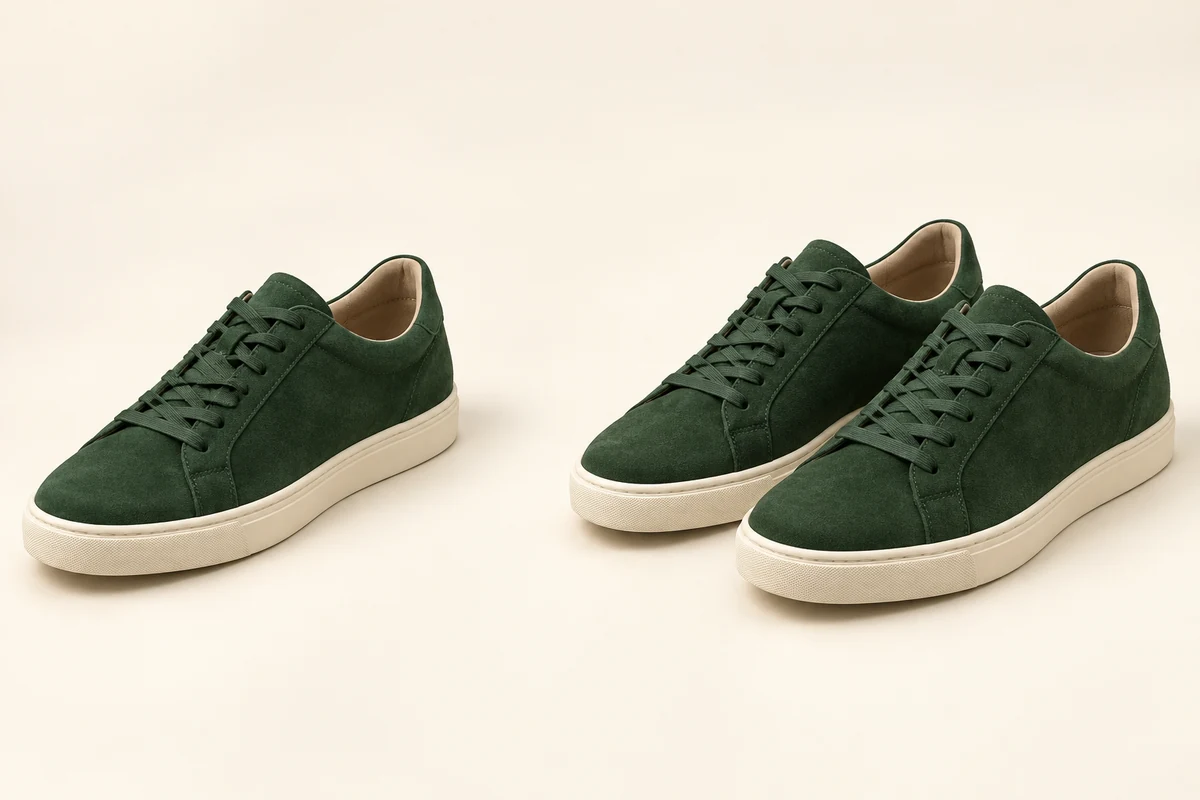
The Arabic word for “shoe” is حِذَاء (ḥidhāʾ) in Standard Arabic. “Shoes” is أَحْذِيَة (aḥdhiya). The word is masculine in Arabic. For a pair, you can use زَوْج مِنَ الْأَحْذِيَة. Here are the essential forms, their pronunciation and phrases for asking about sizes or trying shoes on.
Shoe and shoes in Arabic: essential forms
| Meaning | Arabic | Pronunciation |
|---|---|---|
| A shoe | حِذَاء | ḥidhāʾ |
| Shoes | أَحْذِيَة | aḥdhiya |
| The shoe | الْحِذَاء | al-ḥidhāʾ |
| The shoes | الْأَحْذِيَة | al-aḥdhiya |
| My shoe | حِذَائِي | ḥidhāʾī |
| My shoes | أَحْذِيَتِي | aḥdhiyatī |
Without short vowel marks, the two basic forms are written حذاء and أحذية. The plural aḥdhiya is a broken plural : the internal structure changes. You cannot simply add an ending to the singular.
How do you pronounce حِذَاء and أَحْذِيَة?
ḥidhāʾ breaks down into ḥi–dhāʾ. The letter ح is a pharyngeal h, made by narrowing the throat without turning it into kh. The letter ذ corresponds to the voiced th in English this : place the tip of your tongue lightly between your teeth. It is not a plain d. The ā is long; the final hamza ء marks a glottal stop.
In the plural, aḥdhiya breaks down into aḥ–dhi–ya. The hamza is now at the beginning, and the singular’s long ā has disappeared. Transcriptions help with reading but do not replace careful listening. Isolated words on this page are generally given in their pause form, without final case endings.
Review the letters and vowels: Arabic alphabet · Arabic pronunciation.
Two shoes, a pair and several pairs
To specify one individual shoe, you can say فَرْدَةُ حِذَاءٍ. A pair consists of two matching shoes. In Arabic, distinguish the exact number from the expression that presents them together as a pair.
| Meaning | Arabic | Pronunciation |
|---|---|---|
| Two shoes: nominative | حِذَاءَانِ | ḥidhāʾāni |
| Two shoes: accusative / genitive | حِذَاءَيْنِ | ḥidhāʾayni |
| A pair of shoes | زَوْج مِنَ الْأَحْذِيَة | zawj mina l-aḥdhiya |
| Three pairs of shoes | ثَلَاثَة أَزْوَاج مِنَ الْأَحْذِيَة | thalāthat azwāj mina l-aḥdhiya |
In عِنْدِي حِذَاءَانِ, “I have two shoes”, the noun is nominative. In اِشْتَرَيْتُ حِذَاءَيْنِ, “I bought two shoes”, it is the verb’s object and takes the ending -ayni. The dual alone does not say that the shoes match: context supplies that information. Learn more in two in Arabic and the dual.
Masculine singular, feminine agreement in the plural
حِذَاء is a masculine noun in Arabic. Say هَذَا حِذَاءٌ جَدِيدٌ : “this is a new shoe”. The demonstrative and adjective are masculine.
For this non-human plural, standard agreement uses the feminine singular: هَذِهِ أَحْذِيَةٌ جَدِيدَةٌ, “these are new shoes”. The same rule applies to أَحْذِيَةٌ مُرِيحَةٌ, “comfortable shoes”. “Shoes” remains plural; it is the agreement that is feminine singular.
Trainers, sandals and sports shoes in Arabic
| Meaning | Arabic | Pronunciation |
|---|---|---|
| A sports shoe / trainer | حِذَاء رِيَاضِيّ | ḥidhāʾ riyāḍī |
| Sports shoes / trainers | أَحْذِيَة رِيَاضِيَّة | aḥdhiya riyāḍiyya |
| A leather shoe | حِذَاء جِلْدِيّ | ḥidhāʾ jildī |
| Men’s shoes | أَحْذِيَة رِجَالِيَّة | aḥdhiya rijāliyya |
| Women’s shoes | أَحْذِيَة نِسَائِيَّة | aḥdhiya nisāʾiyya |
| Children’s shoes | أَحْذِيَة لِلْأَطْفَال | aḥdhiya lil-aṭfāl |
| A sandal | صَنْدَل | ṣandal |
| Sandals | صَنَادِل | ṣanādil |
| A slipper | خُفّ | khuff |
| Slippers | خِفَاف | khifāf |
حِذَاء is the general term. نَعْل (naʿl) can mean a sandal or a sole depending on context, so it cannot replace the general word in every sentence. خُفّ can also mean a traditional soft shoe, especially a leather one. The precise style and context matter.
Size, laces and sole: useful words
| Meaning | Arabic | Pronunciation |
|---|---|---|
| Shoe size | مَقَاس الْحِذَاء | maqās al-ḥidhāʾ |
| Shoelace | رِبَاط الْحِذَاء | ribāṭ al-ḥidhāʾ |
| Shoe sole | نَعْل الْحِذَاء | naʿl al-ḥidhāʾ |
| Shoe heel | كَعْب الْحِذَاء | kaʿb al-ḥidhāʾ |
| Shoe shop | مَتْجَر أَحْذِيَة | matjar aḥdhiya |
| A comfortable shoe | حِذَاء مُرِيح | ḥidhāʾ murīḥ |
| A tight / narrow shoe | حِذَاء ضَيِّق | ḥidhāʾ ḍayyiq |
| A wide shoe | حِذَاء وَاسِع | ḥidhāʾ wāsiʿ |
To describe a colour, you can say حِذَاء أَسْوَد, “a black shoe”, and أَحْذِيَة سَوْدَاء, “black shoes”. See other agreement patterns on the colours in Arabic guide.
Six phrases for buying and trying on shoes
These examples use Standard Arabic. The endings show the grammar; in speech, pause pronunciation may omit them.
- أُرِيدُ زَوْجًا مِنَ الْأَحْذِيَةِ.
I would like a pair of shoes.
- مَا مَقَاسُ هَذَا الْحِذَاءِ؟
What size is this shoe?
- هَلْ عِنْدَكُمْ مَقَاسٌ أَكْبَرُ؟
Do you have a larger size?
- هَلْ يُمْكِنُنِي تَجْرِبَةُ هَذَا الْحِذَاءِ؟
May I try this shoe on?
- هَذَا الْحِذَاءُ ضَيِّقٌ.
This shoe is too tight.
- كَمْ سِعْرُ هَذَا الْحِذَاءِ؟
How much does this shoe cost?
Putting on and taking off shoes
أَلْبَسُ حِذَائِي means “I put on / wear my shoe”. The verb لَبِسَ means to dress or wear clothing. For taking off: أَخْلَعُ حِذَائِي, “I take off my shoe”; in the plural, أَخْلَعُ أَحْذِيَتِي, “I take off my shoes”.
To tell a man “take off your shoes”: اِخْلَعْ حِذَاءَكَ. To a woman: اِخْلَعِي حِذَاءَكِ. The singular can refer generically to footwear; to explicitly use the plural “shoes”, use أَحْذِيَتَكَ or أَحْذِيَتَكِ.
Standard Arabic and Darija: what is the difference?
This lesson teaches Standard Arabic: حِذَاء and أَحْذِيَة. In Morocco, you will also hear صَبَّاط (ṣəbbāṭ, often written sbbat). Everyday words and their plurals vary between countries and regions. A dialect form is not a mistake, but learners should know which register they are learning.
Quick exercise: can you remember the forms?
How do you say “shoes”, “my shoes” and “comfortable shoes”?
Show the answers
أَحْذِيَة — أَحْذِيَتِي — أَحْذِيَة مُرِيحَة. In the last expression, the adjective is feminine singular.
Continuez à pratiquer
Un dictionnaire visuel pour élargir votre vocabulaire
Le Robert & Collins – Dictionnaire visuel arabe
Après le mot « chaussure », élargissez votre vocabulaire quotidien en associant mots et images. Le Robert & Collins – Dictionnaire visuel arabe est une édition français-arabe : son classement thématique permet de poursuivre vos révisions avec un support illustré.
Lien affilié Amazon.
Voir sur AmazonBuild your practice
Build your vocabulary with pictures
Arabic English Bilingual Visual Dictionary – DK
After learning the word for “shoe”, build on clothing vocabulary with DK’s Arabic–English visual dictionary. It groups everyday words by topic and pairs them with pictures. This is an English–Arabic edition.
Amazon affiliate link.
View on AmazonWort für Wort
Den Wortschatz mit Bildern erweitern
PONS Bildwörterbuch Arabisch: 1.500 nützliche Wörter für den Alltag
Nach dem Wort für „Schuh“ können Sie Ihren Wortschatz weiter üben: Das deutsch-arabische PONS-Bildwörterbuch bietet 1.500 Alltagsbegriffe mit Bildern. Zu den Themen gehört auch Kleidung.
Amazon-Affiliate-Link.
Auf Amazon ansehenPalabra a palabra
Amplía tu vocabulario con imágenes
Diccionario de árabe 100% Visual – Larousse Editorial
Después de aprender la palabra «zapato», sigue ampliando tu vocabulario cotidiano. Este diccionario visual español-árabe reúne palabras y expresiones organizadas por temas y acompañadas de imágenes.
Enlace de afiliado de Amazon.
Ver en AmazonFrequently asked questions about shoe in Arabic
How do you say shoe and shoes in Arabic?
A shoe is حِذَاء (ḥidhāʾ). The plural is أَحْذِيَة (aḥdhiya). With the article: الْحِذَاء, the shoe, and الْأَحْذِيَة, the shoes.
What is the grammatical gender of حذاء?
حِذَاء is a masculine noun in Arabic. Say حِذَاء جَدِيد, a new shoe. For this non-human plural, use feminine singular agreement: أَحْذِيَة جَدِيدَة.
How do you say a pair of shoes in Arabic?
You can say زَوْج مِنَ الْأَحْذِيَة (zawj mina l-aḥdhiya). To count exactly two shoes, the dual is حِذَاءَانِ in the nominative or حِذَاءَيْنِ in the accusative and genitive.
How do you say trainers in Arabic?
حِذَاء رِيَاضِيّ (ḥidhāʾ riyāḍī) means a sports shoe. In the plural: أَحْذِيَة رِيَاضِيَّة (aḥdhiya riyāḍiyya).
How do you say my shoes in Arabic?
“My shoes” is أَحْذِيَتِي (aḥdhiyatī). “My shoe” is حِذَائِي (ḥidhāʾī). The spelling of the hamza changes in this last form.
Is the word the same in Moroccan Darija?
In Moroccan Darija, صَبَّاط (ṣəbbāṭ, often written sbbat) is common for a shoe. Vocabulary and pronunciation vary by region. حِذَاء remains the Standard Arabic form taught in this lesson.