Belt in Arabic: حِزَام, plural and pronunciation
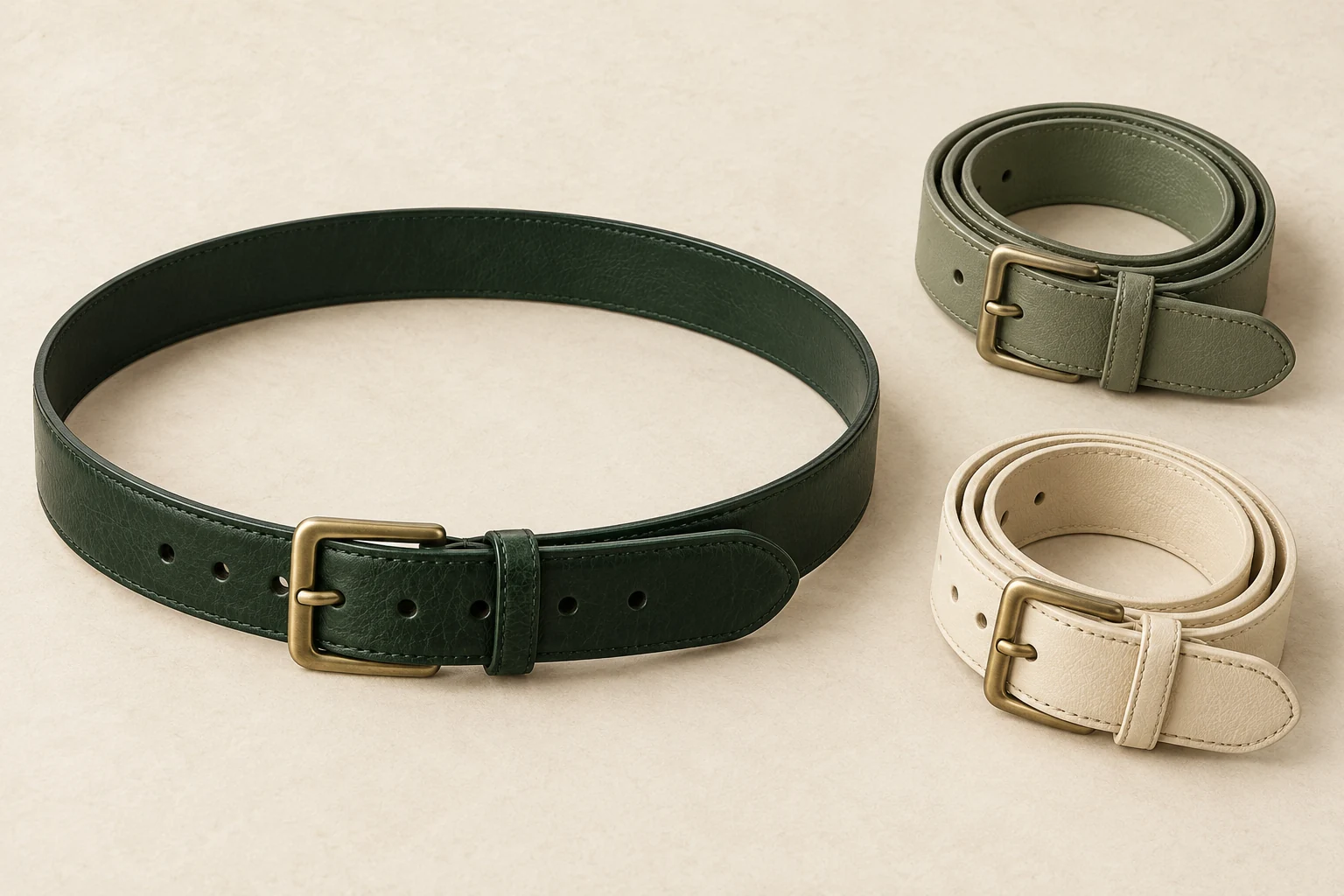
A belt is حِزَام (ḥizām) in Modern Standard Arabic. Its common plural is أَحْزِمَة (aḥzima). The Arabic noun is masculine. This lesson focuses on a belt worn with trousers: you will learn to describe it, ask where yours is and distinguish the word on its own from its uses in expressions.
A belt, belts and possession
Learn the singular and plural together. Aḥzima is a broken plural: the internal structure changes rather than simply gaining a regular ending. The long ā of the singular disappears. The table gives vocabulary forms without case endings; the sentences below show those endings where written.
For “my belt”, add the suffix -ī: ḥizāmī. For “my belts”, the plural’s final ة becomes a t before this suffix: aḥzimatī. These possessive forms do not take the article al-. Do not add the article before ḥizāmī to say “my belt”.
| Meaning | Arabic | Pronunciation |
|---|---|---|
| A belt | حِزَام | ḥizām |
| Belts | أَحْزِمَة | aḥzima |
| The belt | الْحِزَام | al-ḥizām |
| The belts | الْأَحْزِمَة | al-aḥzima |
| My belt | حِزَامِي | ḥizāmī |
| My belts | أَحْزِمَتِي | aḥzimatī |
Pronouncing ḥizām and aḥzima
In ḥizām, the symbol ḥ represents ح, a sound produced in the throat, distinct from an ordinary h and from kh. Pronounce the short i, then the long ā: ḥi–zām. The z corresponds to ز. Transliteration helps identify sounds but does not replace listening to Arabic pronunciation.
With the article, say al-ḥizām: ح is a moon letter, so the l remains audible. In the plural aḥzima, all the written vowels are short. Do not retain the singular’s ā. When reading case endings aloud, aḥzimatun includes the final t; the vocabulary form at a pause is aḥzima.
Masculine singular and plural agreement
Ḥizām is masculine: in “a new belt”, the adjective is masculine, حِزَامٌ جَدِيدٌ. The gender of a translated word does not determine the Arabic gender. To point to one belt, use hādhā, the masculine demonstrative. The adjective follows the noun it describes.
In the plural, belts are things, not people. In Modern Standard Arabic, agreement is normally feminine singular: أَحْزِمَةٌ جَدِيدَةٌ, “new belts”. Use hādhihi for “these belts”. This agreement does not make the singular noun feminine: it follows the rule for non-human plurals.
Eight examples using belt in Arabic
The transliterations below retain written endings to show the grammar. At a pause, some endings are pronounced differently. In “I want a black belt”, aswada does not take tanwīn: this colour adjective follows a special declension. Start with the short sentences, then change the colour or material.
| Arabic | Meaning |
|---|---|
| هٰذَا حِزَامٌ جَدِيدٌ. hādhā ḥizāmun jadīdun. | This is a new belt. |
| الْحِزَامُ طَوِيلٌ. al-ḥizāmu ṭawīlun. | The belt is long. |
| أُرِيدُ حِزَامًا أَسْوَدَ. urīdu ḥizāman aswada. | I want a black belt. |
| أَيْنَ حِزَامِي؟ ayna ḥizāmī? | Where is my belt? |
| هٰذِهِ أَحْزِمَةٌ جَدِيدَةٌ. hādhihi aḥzimatun jadīdatun. | These are new belts. |
| الْأَحْزِمَةُ فِي الْخِزَانَةِ. al-aḥzimatu fī l-khizānati. | The belts are in the wardrobe. |
| عِنْدِي حِزَامٌ مِنْ جِلْدٍ. ʿindī ḥizāmun min jildin. | I have a leather belt. |
| أَرْبِطُ حِزَامَ الْأَمَانِ. arbiṭu ḥizāma l-amāni. | I fasten my seat belt. |
Clothing belts, seat belts and other meanings
The word ḥizām does not refer only to a clothing accessory. In حِزَامُ الْأَمَانِ, the complement specifies “seat belt”. Do not translate an expression by looking only at its first word. Dictionaries also give the plural حُزُم (ḥuzum); as a beginner, learn aḥzima and recognise the other form when you encounter it.
Dictionaries also record minṭaqa meaning a belt. This word can also refer to an area or region, so context is still necessary. To name the accessory worn around the waist in this lesson, use ḥizām. You do not need to memorise every synonym before learning to use the main word.
Reviewing the forms
Cover the Arabic column and recall “a belt”, “belts” and “my belt”. Then describe a new belt and several new belts. Check the masculine singular and the feminine singular adjective with the plural. Finally, ask “Where is my belt?” without looking at the table.
Continuez à pratiquer
Un dictionnaire visuel pour élargir votre vocabulaire
Le Robert & Collins – Dictionnaire visuel arabe
Après le mot « ceinture », élargissez votre vocabulaire quotidien en associant mots et images. Le Robert & Collins – Dictionnaire visuel arabe est une édition français-arabe : son classement thématique permet de poursuivre vos révisions avec un support illustré.
Lien affilié Amazon.
Voir sur AmazonBuild your practice
Build your vocabulary with pictures
Arabic English Bilingual Visual Dictionary – DK
After learning the word for “belt”, build on clothing vocabulary with DK’s Arabic–English visual dictionary. It groups everyday words by topic and pairs them with pictures. This is an English–Arabic edition.
Amazon affiliate link.
View on AmazonWort für Wort
Den Wortschatz mit Bildern erweitern
PONS Bildwörterbuch Arabisch: 1.500 nützliche Wörter für den Alltag
Nach dem Wort für „Gürtel“ können Sie Ihren Wortschatz weiter üben: Das deutsch-arabische PONS-Bildwörterbuch bietet 1.500 Alltagsbegriffe mit Bildern. Zu den Themen gehört auch Kleidung.
Amazon-Affiliate-Link.
Auf Amazon ansehenPalabra a palabra
Amplía tu vocabulario con imágenes
Diccionario de árabe 100% Visual – Larousse Editorial
Después de aprender la palabra «cinturón», sigue ampliando tu vocabulario cotidiano. Este diccionario visual español-árabe reúne palabras y expresiones organizadas por temas y acompañadas de imágenes.
Enlace de afiliado de Amazon.
Ver en AmazonFrequently asked questions
How do you say “belt” in Arabic?
A belt is حِزَام (ḥizām) in Modern Standard Arabic. The word can refer to a band worn around the waist, especially to hold clothing in place.
What is the plural of ḥizām?
The plural to learn is أَحْزِمَة (aḥzima). Dictionaries also list حُزُم (ḥuzum). Both are broken plurals: the structure of the singular changes.
Is the Arabic word for belt masculine or feminine?
حِزَام is masculine in the singular. The plural أَحْزِمَة refers to objects and normally takes a feminine singular adjective: أَحْزِمَةٌ جَدِيدَةٌ, “new belts”.
How do you say “my belt” in Arabic?
Say حِزَامِي (ḥizāmī). The suffix -ī means “my”. “My belts” is أَحْزِمَتِي (aḥzimatī): the plural’s ة becomes t before the suffix.
How do you say “seat belt” in Arabic?
Say حِزَامُ الْأَمَانِ (ḥizāmu l-amāni). The complement الْأَمَانِ specifies safety rather than simply a clothing accessory.
Can minṭaqa also mean “belt”?
Yes, dictionaries also give مِنْطَقَة (minṭaqa) this meaning. However, the word can also refer to an area or region. For a straightforward clothing term, learn حِزَام (ḥizām).
Continue learning clothes in Arabic
Combine a belt with trousers and a shirt, then find other garments in the clothing guide. Review the sounds with the pronunciation guide.