
Bag in Arabic: حَقِيبَة, plural and pronunciation
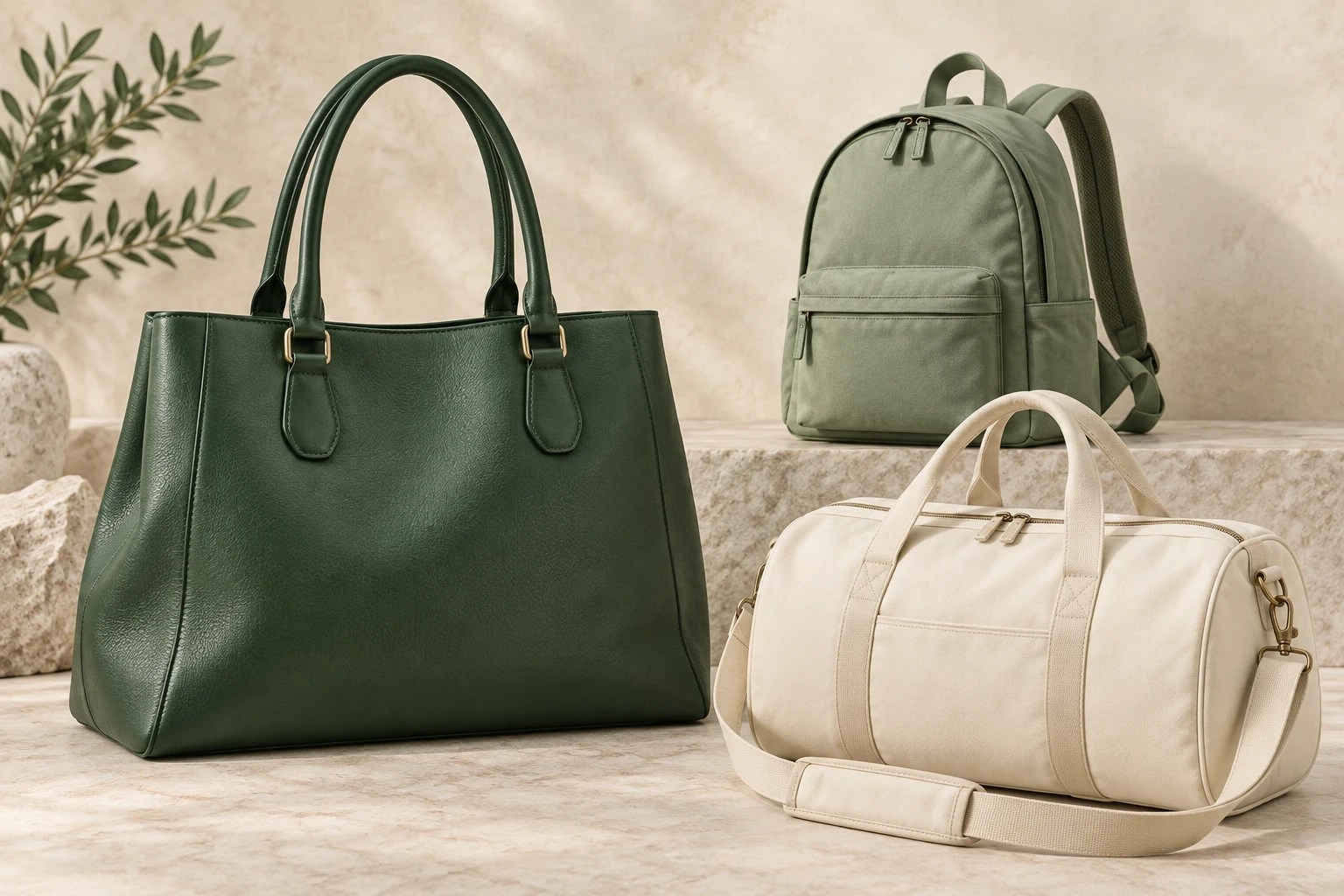
For a bag that you carry or a piece of luggage, Modern Standard Arabic uses حَقِيبَة (ḥaqība). Its plural is حَقَائِب (ḥaqāʾib). The Arabic noun is feminine. This lesson teaches you to describe your bag, ask where it is and specify what kind of bag you mean. Context matters: not every object called a “bag” in English is translated with this one word.
A bag, bags and possession
Learn the two forms together: ḥaqība in the singular and ḥaqāʾib in the plural. This is a broken plural: the internal structure changes rather than simply gaining a regular ending. The singular’s long ī is replaced by ā followed by i in the plural. The table gives vocabulary forms without case endings; the sentences below show the endings where written.
To say “my bag”, add the suffix -ī. The singular’s final ة then becomes an audible t: ḥaqībatī. For “my bags”, say ḥaqāʾibī. These possessive forms do not take the article al-. The same suffix -ī expresses “my” whether the Arabic noun is masculine or feminine, singular or plural.
| Meaning | Arabic | Pronunciation |
|---|---|---|
| A bag | حَقِيبَة | ḥaqība |
| Bags | حَقَائِب | ḥaqāʾib |
| The bag | الْحَقِيبَة | al-ḥaqība |
| The bags | الْحَقَائِب | al-ḥaqāʾib |
| My bag | حَقِيبَتِي | ḥaqībatī |
| My bags | حَقَائِبِي | ḥaqāʾibī |
Pronouncing ḥaqība and ḥaqāʾib
In ḥaqība, ḥ represents ح, a throat sound distinct from an ordinary h and from kh. The q represents ق, pronounced further back than k in Modern Standard Arabic. Make the ī long: ḥa–qī–ba. With the article, say al-ḥaqība: the l remains audible because the noun begins with a moon letter.
In the plural, the ʾ in ḥaqāʾib represents hamza: a brief glottal closure between ā and i. Do not merge these vowels into one. In vocabulary forms, the singular ends in -a at a pause. With case endings or a suffix, its t can be heard. Transliteration is a guide, not a replacement for listening to Arabic.
Feminine gender and plural agreement
Ḥaqība is feminine: “a new bag” is حَقِيبَةٌ جَدِيدَةٌ. The adjective follows the noun and takes the feminine form here. To point to a bag, use hādhihi, the feminine demonstrative, rather than hādhā. Learn the noun with a short example instead of in isolation so that its Arabic gender becomes familiar.
Bags are objects, not people. In the plural, agreement is normally feminine singular: حَقَائِبُ جَدِيدَةٌ, “new bags”. Hādhihi is also used to refer to them. Notice that ḥaqāʾibu has no tanwīn: this plural follows a special declension. The adjective jadīdatun does retain its tanwīn here.
Eight examples using bag in Arabic
The sentences below are teaching examples. Their transliterations retain written endings to make the grammar visible; at a pause, some endings are pronounced differently. Start by identifying the noun and adjective, then practise asking about your own bag. Do not try to reproduce English word order word for word.
| Arabic | Meaning |
|---|---|
| هَذِهِ حَقِيبَةٌ جَدِيدَةٌ. hādhihi ḥaqībatun jadīdatun | This is a new bag. |
| حَقِيبَتِي خَفِيفَةٌ. ḥaqībatī khafīfatun | My bag is light. |
| أَضَعُ الْكِتَابَ فِي الْحَقِيبَةِ. aḍaʿu l-kitāba fī l-ḥaqībati | I put the book in the bag. |
| أُرِيدُ حَقِيبَةَ يَدٍ. urīdu ḥaqībata yadin | I would like a handbag. |
| هَذِهِ حَقَائِبُ صَغِيرَةٌ. hādhihi ḥaqāʾibu ṣaghīratun | These are small bags. |
| أَيْنَ حَقِيبَةُ السَّفَرِ؟ ayna ḥaqībatu s-safari? | Where is the suitcase? |
| حَقَائِبِي فِي الْغُرْفَةِ. ḥaqāʾibī fī l-ghurfati | My bags are in the room. |
| أَحْمِلُ حَقِيبَةَ ظَهْرٍ. aḥmilu ḥaqībata ẓahrin | I am carrying a backpack. |
Handbag, luggage or carrier bag: specifying the meaning
A complement specifies the type of bag. حَقِيبَةُ يَدٍ means a handbag, while حَقِيبَةُ سَفَرٍ can mean a travel bag or suitcase. The noun alone does not tell you whether the object has wheels, a shoulder strap or handles. Consider the situation before choosing the most natural English translation.
For a small bag, packaging bag or sack used to contain goods, you will more often encounter كِيس (kīs), plural أَكْيَاس (akyās). It is not an automatic substitute for ḥaqība: the choice depends on the object and its use. Start by distinguishing a personal bag carried as an accessory from a simple container. Dialect usage may also differ from the standard vocabulary presented here.
Reviewing the forms and choosing the right word
Cover the Arabic column and recall “a bag”, “bags”, “my bag” and “my bags”. Then describe a new bag and several new bags: the adjective is feminine singular in both cases. Finally, imagine a handbag and then a packaging bag. Can you choose the appropriate word and explain why the two objects do not necessarily have the same name?
Enrichissez votre vocabulaire
Des images pour élargir votre vocabulaire arabe
Le Robert & Collins – Dictionnaire visuel arabe
Après avoir étudié le mot arabe pour le sac, poursuivez avec des mots du quotidien associés à des images. Ce dictionnaire visuel français-arabe du Robert rassemble 4 000 mots et expressions illustrés, classés par thème. Son édition bilingue français-arabe convient aux lecteurs qui souhaitent s’appuyer sur le français pour explorer le vocabulaire arabe.
Lien affilié Amazon
Voir sur AmazonBuild your vocabulary
Explore Arabic vocabulary through pictures
Arabic English Bilingual Visual Dictionary
After studying the Arabic word for a bag, build on clothing vocabulary with DK’s visual dictionary. It groups everyday words by topic and pairs them with pictures. This is the 2024 English–Arabic edition.
Amazon affiliate link
View on AmazonWortschatz erweitern
Arabische Wörter mit Bildern entdecken
PONS Bildwörterbuch Arabisch: 1.500 nützliche Wörter für den Alltag
Nach der Lektion über das arabische Wort für eine Tasche können Sie den Wortschatz wiederholen und erweitern. Das deutsch-arabische PONS-Bildwörterbuch bietet 1.500 Alltagsbegriffe mit Bildern. Zu den Themen gehört auch Kleidung. Diese Ausgabe ist zweisprachig Deutsch-Arabisch.
Amazon-Affiliate-Link
Auf Amazon ansehenAmplía tu vocabulario
Descubre palabras árabes con imágenes
Diccionario de árabe 100% Visual
Después de estudiar la palabra árabe para el bolso, amplía tu vocabulario cotidiano con este diccionario visual español-árabe de Larousse. Reúne 2.000 palabras y expresiones organizadas en 80 temas cotidianos y acompañadas de imágenes. Es una edición bilingüe español-árabe.
Enlace de afiliado de Amazon
Ver en AmazonFrequently asked questions
How do you say “bag” in Arabic?
For a bag used to carry belongings, Modern Standard Arabic uses حَقِيبَة (ḥaqība). Depending on the context and complement, it can refer to a handbag, backpack or piece of luggage.
What is the plural of ḥaqība?
The common plural is حَقَائِب (ḥaqāʾib). It is a broken plural: the word’s internal structure changes. Learn the singular and plural together rather than adding a regular ending to the singular.
Is ḥaqība masculine or feminine?
حَقِيبَة is feminine. You say هَذِهِ حَقِيبَةٌ جَدِيدَةٌ : “This is a new bag.” With the non-human plural ḥaqāʾib, the adjective is normally feminine singular.
How do you say “handbag” and “backpack” in Arabic?
“Handbag” is حَقِيبَةُ يَدٍ (ḥaqībatu yadin), and “backpack” is حَقِيبَةُ ظَهْرٍ (ḥaqībatu ẓahrin). In these constructions, the final t of ḥaqība is audible. These transliterations include the written case endings.
What is the difference between ḥaqība and kīs?
حَقِيبَة often refers to a bag for personal belongings or a piece of luggage. كِيس (kīs), plural أَكْيَاس (akyās), is used particularly for a small bag or a paper or plastic bag. The choice depends on the object and its use.
Can ḥaqība also mean “suitcase”?
Yes, depending on the context. حَقِيبَةُ سَفَرٍ (ḥaqībatu safarin) refers to travel luggage and can be translated as “travel bag” or “suitcase” depending on the object. The word alone does not specify a particular shape or set of features.
Continue learning clothes in Arabic
Add bags to your vocabulary of clothing and accessories. Explore trousers and shirts in the related lessons, then review the sounds with the pronunciation guide.