
Scarf in Arabic: وِشَاح, plural and pronunciation
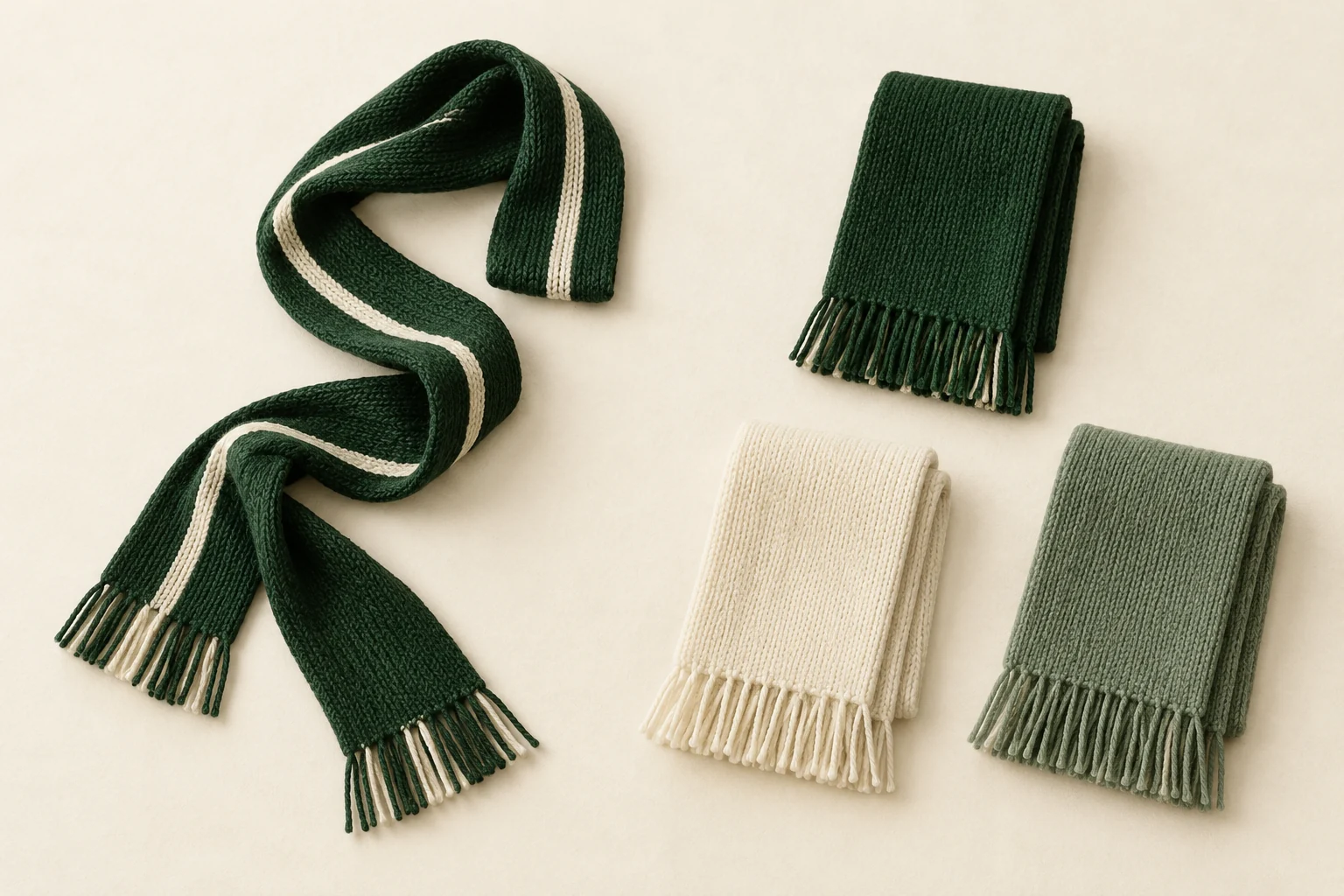
A scarf is وِشَاح (wishāḥ) in Modern Standard Arabic. One of its plurals is أَوْشِحَة (awshiḥa). The Arabic noun is masculine in the singular. This lesson helps you recognise its forms, describe a warm scarf and ask where yours is.
A scarf, scarves and possession
Awshiḥa is a broken plural: the word’s structure changes rather than simply gaining an ending. Learn wishāḥ and awshiḥa together. Dictionaries also list other plurals; this one is enough for the examples in this lesson. The first four table rows are vocabulary forms without case endings.
For “my scarf”, add the suffix -ī: wishāḥī. In the plural, the final letter ة becomes a t before this suffix: awshiḥatī means “my scarves”. This t is not a new plural marker. Do not add the article al- at the start of either possessive form.
| Meaning | Arabic | Pronunciation |
|---|---|---|
| A scarf | وِشَاح | wishāḥ |
| Scarves | أَوْشِحَة | awshiḥa |
| The scarf | الْوِشَاح | al-wishāḥ |
| The scarves | الْأَوْشِحَة | al-awshiḥa |
| My scarf | وِشَاحِي | wishāḥī |
| My scarves | أَوْشِحَتِي | awshiḥatī |
Pronouncing wishāḥ and awshiḥa
Break the word into wi-shāḥ: i is short, sh is as in “ship”, and ā is long. The ḥ represents ح, a constricted breath sound in the throat with no exact English equivalent. Do not leave it out or replace it with kh. The initial w is like the w in “we”, not v.
In the plural, say aw-shi-ḥa without retaining the singular’s long ā. With the article, the l in al-wishāḥ remains audible: w is a moon letter. The sentences below retain grammatical endings in both Arabic and transliteration. Thus awshiḥatun shows the t of the final ة, which is absent from the isolated form awshiḥa.
Neck scarf, shawl or ceremonial sash?
Wishāḥ works for a scarf worn around the neck, but its meaning is not limited to winter clothing. Depending on context, it can also refer to a ceremonial sash worn diagonally across the torso. For a shawl placed over the shoulders, you will encounter شَال (shāl). Usage can overlap: look at the item and the sentence. To specify the material clearly, “a wool scarf” is a useful phrase.
| Arabic | Meaning |
|---|---|
| وِشَاحٌ مِنَ الصُّوفِ wishāḥun mina ṣ-ṣūfi | A wool scarf |
| وِشَاحٌ مِنَ الْحَرِيرِ wishāḥun mina l-ḥarīri | A silk scarf |
Adjective agreement with one or several scarves
In the singular, wishāḥ takes hādhā, “this”, and a masculine adjective: dāfiʾ means “warm”. In the plural, scarves are objects. This non-human plural normally takes feminine singular agreement in Modern Standard Arabic: hādhihi awshiḥatun jadīdatun. The form jadīda therefore does not mean there is only one scarf; the noun awshiḥa indicates the plural.
| Arabic | Meaning |
|---|---|
| هَذَا وِشَاحٌ دَافِئٌ. hādhā wishāḥun dāfiʾun. | This is a warm scarf. |
| هَذِهِ أَوْشِحَةٌ جَدِيدَةٌ. hādhihi awshiḥatun jadīdatun. | These are new scarves. |
| هَذَا الْوِشَاحُ طَوِيلٌ. hādhā l-wishāḥu ṭawīlun. | This scarf is long. |
Finding your scarf and asking for one
These first-person sentences work regardless of the speaker’s gender. After “I want” or “I wear”, wishāḥan is the direct object in the accusative. In mina ṣ-ṣūfi, “made of wool”, the preposition min requires the genitive. Reuse the question and answer to locate your scarf, then read the request as a complete sentence.
| Arabic | Meaning |
|---|---|
| أَيْنَ وِشَاحِي؟ ayna wishāḥī? | Where is my scarf? |
| وِشَاحِي فِي حَقِيبَتِي. wishāḥī fī ḥaqībatī. | My scarf is in my bag. |
| أُرِيدُ وِشَاحًا مِنَ الصُّوفِ. urīdu wishāḥan mina ṣ-ṣūfi. | I want a wool scarf. |
| أَلْبَسُ وِشَاحًا فِي الشِّتَاءِ. albasu wishāḥan fī sh-shitāʾi. | I wear a scarf in winter. |
Remembering the forms in three steps
Cover the table and recall “a scarf”, “scarves” and “my scarves”. Check the singular’s long ā, its absence in awshiḥa, and the t in awshiḥatī. Next, describe a warm scarf and then several new scarves. Finally, say where your scarf is. You will have practised pronunciation, possession and agreement using the same object.
Continuez à pratiquer
Un mot appris, une nouvelle occasion de pratiquer l’arabe
Apprendre à lire et écrire l’arabe en 30 jours
Après avoir révisé le mot « écharpe » et ses formes dans cette fiche, continuez à travailler la lecture et l’écriture de l’arabe. Le cahier de l’auteur du site, en français pour les débutants francophones, propose l’alphabet, de l’écriture guidée et du vocabulaire courant, avec des exercices et leurs corrigés.
Lien affilié Amazon · livre de l’auteur de Mot-Arabe.
Voir sur AmazonBuild your practice
Turn your next Arabic word into writing practice
Apprendre à lire et écrire l’arabe en 30 jours
After reviewing “scarf” and its Arabic forms in this lesson, keep practising Arabic reading and writing. This French-language workbook by the site’s author is intended for French-speaking beginners and covers the alphabet, guided writing and everyday vocabulary, with exercises and answers.
Amazon affiliate link · book by the author of Mot-Arabe.
View on AmazonWort für Wort
Ein neues Wort als Anlass zum Schreiben nutzen
Apprendre à lire et écrire l’arabe en 30 jours
Nachdem Sie das Wort für „Schal“ und seine arabischen Formen in dieser Lektion geübt haben, können Sie das Lesen und Schreiben weiter vertiefen. Das französischsprachige Arbeitsbuch des Website-Autors richtet sich an Anfänger mit Französischkenntnissen und bietet Alphabet, angeleitetes Schreiben und Alltagswortschatz mit Übungen und Lösungen.
Amazon-Affiliate-Link · Buch vom Autor von Mot-Arabe.
Auf Amazon ansehenPalabra a palabra
Una palabra nueva para seguir practicando la escritura árabe
Apprendre à lire et écrire l’arabe en 30 jours
Después de repasar «bufanda» y sus formas árabes en esta lección, sigue practicando la lectura y la escritura árabes. El cuaderno en francés del autor de esta web está dirigido a principiantes francófonos y ofrece alfabeto, escritura guiada y vocabulario cotidiano, con ejercicios y soluciones.
Enlace de afiliado de Amazon · libro del autor de Mot-Arabe.
Ver en AmazonFrequently asked questions
How do you say scarf in Arabic?
A scarf is وِشَاح (wishāḥ) in Modern Standard Arabic. The noun is masculine in the singular and can refer to a scarf worn around the neck. Its precise meaning depends on context.
What is the plural of wishāḥ?
Learn أَوْشِحَة (awshiḥa), a broken plural. The structure changes and the long ā of wishāḥ disappears. Dictionaries give several plurals: awshiḥa is not the only possible form.
How do you pronounce wishāḥ with the article?
Say الْوِشَاح (al-wishāḥ). The w is a moon letter, so the article’s l is pronounced. Keep the long ā and final ḥ, which represents a sound produced in the throat.
How do you say my scarf and my scarves?
“My scarf” is وِشَاحِي (wishāḥī); “my scarves” is أَوْشِحَتِي (awshiḥatī). The suffix -ī marks possession. In the plural, the ending -a becomes -at- before this suffix.
Do wishāḥ and shāl mean the same thing?
Their uses can overlap. شَال (shāl) can name a shawl placed over the shoulders. Wishāḥ can refer to a neck scarf or a ceremonial sash. Context helps you choose the translation.
Why do you say awshiḥa jadīda?
Scarves form a non-human plural. The adjective therefore normally takes the feminine singular: أَوْشِحَةٌ جَدِيدَةٌ (awshiḥatun jadīdatun), “new scarves”. The noun wishāḥ remains masculine in the singular.
Continue learning clothes in Arabic
Build your vocabulary with glove and coat, then find other garments in the clothing guide. The pronunciation guide helps you review the consonants and long vowels used here.