Pin in Arabic: دَبُّوس, plural and examples
A pin is دَبُّوس (dabbūs) in Standard Arabic. This masculine noun refers here to the small headed metal pin used in sewing to hold fabric in place. Its plural is دَبَابِيس (dabābīs). This lesson presents the straight sewing pin: it should not be confused with the needle through which thread is passed.
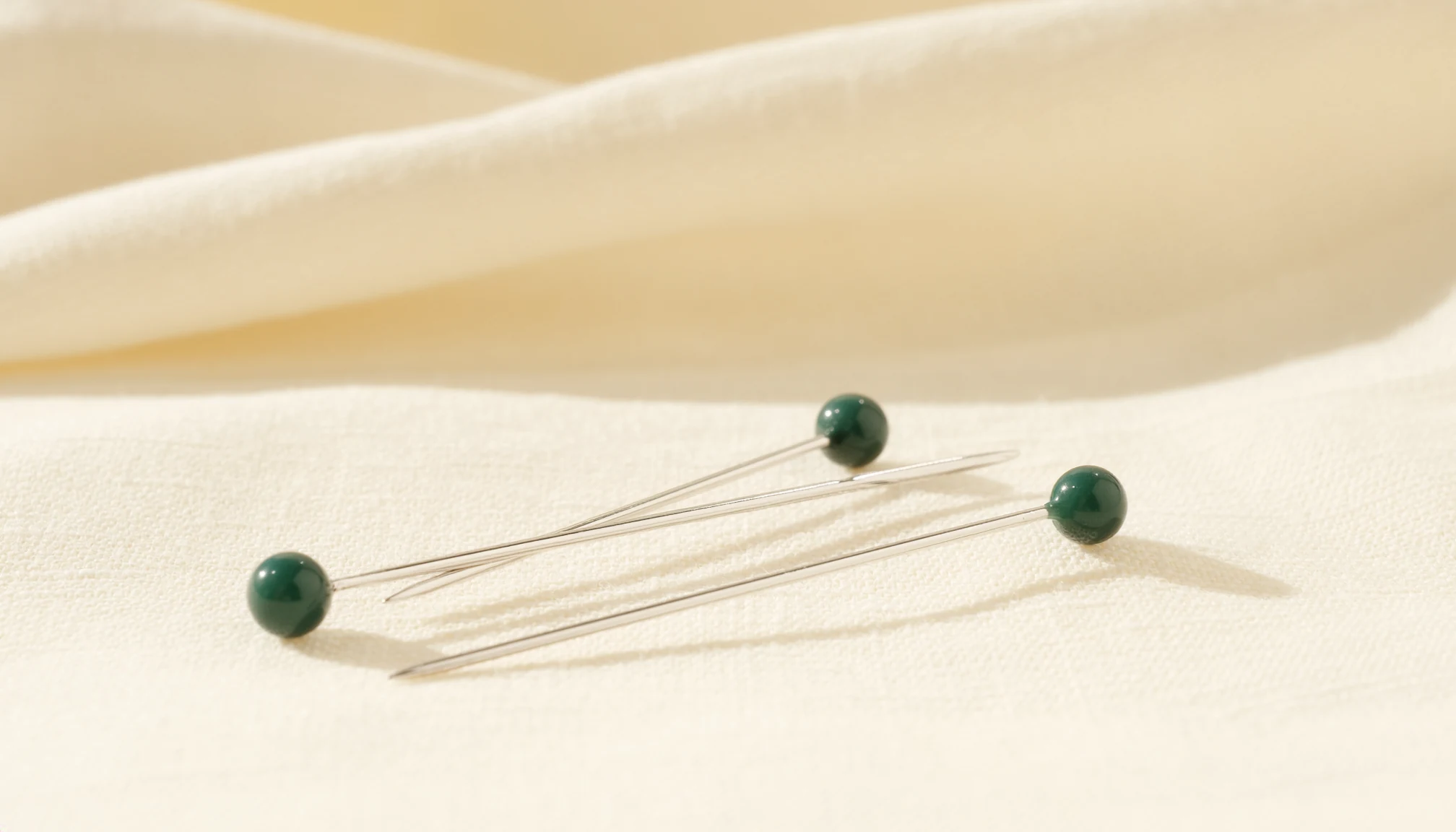
Forms to remember
| English | Arabic | Transliteration |
|---|---|---|
| A pin — masculine in Arabic | دَبُّوس | dabbūs |
| Pins | دَبَابِيس | dabābīs |
| The pin | الدَّبُّوس | ad-dabbūs |
| A sewing pin | دَبُّوسُ خِيَاطَةٍ | dabbūsu khiyāṭatin |
The first three forms are shown without case endings, as words to memorise. The expression دَبُّوسُ خِيَاطَةٍ specifies the sewing context and retains its grammatical endings. The plural دَبَابِيس is a broken plural: the word changes form instead of simply receiving an ending. Learn dabbūs and dabābīs together, comparing their vowels and consonants.
Pronouncing dabbūs and dabābīs
In dabbūs, the a is short, the b is doubled and the ū is long. Hold the b slightly before moving to the long oo sound. In the plural dabābīs, the two b sounds are separated by a long ā; the ī is also long. Do not retain the singular’s doubled consonant in the same place in the plural.
With the article, the spelling is الدَّبُّوس and the pronunciation is ad-dabbūs. The article’s l assimilates to d because د is a sun letter. This assimilation does not affect the doubled b, which already belongs to the word. Transliteration is a guide; the endings in the examples below reflect connected grammatical reading and may change when pausing.
Three sentences to practise
هٰذَا دَبُّوسٌ صَغِيرٌ.
hādhā dabbūsun ṣaghīrun.
This is a small pin.
أُثَبِّتُ الْقُمَاشَ بِالدَّبُّوسِ.
uthabbitu l-qumāsha bi-d-dabbūsi.
I secure the fabric with the pin.
هٰذِهِ الدَّبَابِيسُ مُلَوَّنَةٌ.
hādhihi d-dabābīsu mulawwanatun.
These pins are coloured.
In the first sentence, the demonstrative and adjective are masculine singular, like the Arabic noun. In the third, the plural refers to objects: Standard Arabic normally uses feminine singular agreement. These sentences are original teaching examples, not quotations from the dictionary.
Distinguishing a pin from a needle
A sewing pin temporarily holds pieces of fabric in place. A needle, إِبْرَة (ibra), has an eye through which thread, خَيْط (khayṭ), passes. To remember the difference, connect dabbūs with “holding” and ibra with “sewing”. Fabric, قُمَاش (qumāsh), is the material on which these tools are used. This distinction helps avoid translating every small pointed object with the same word.
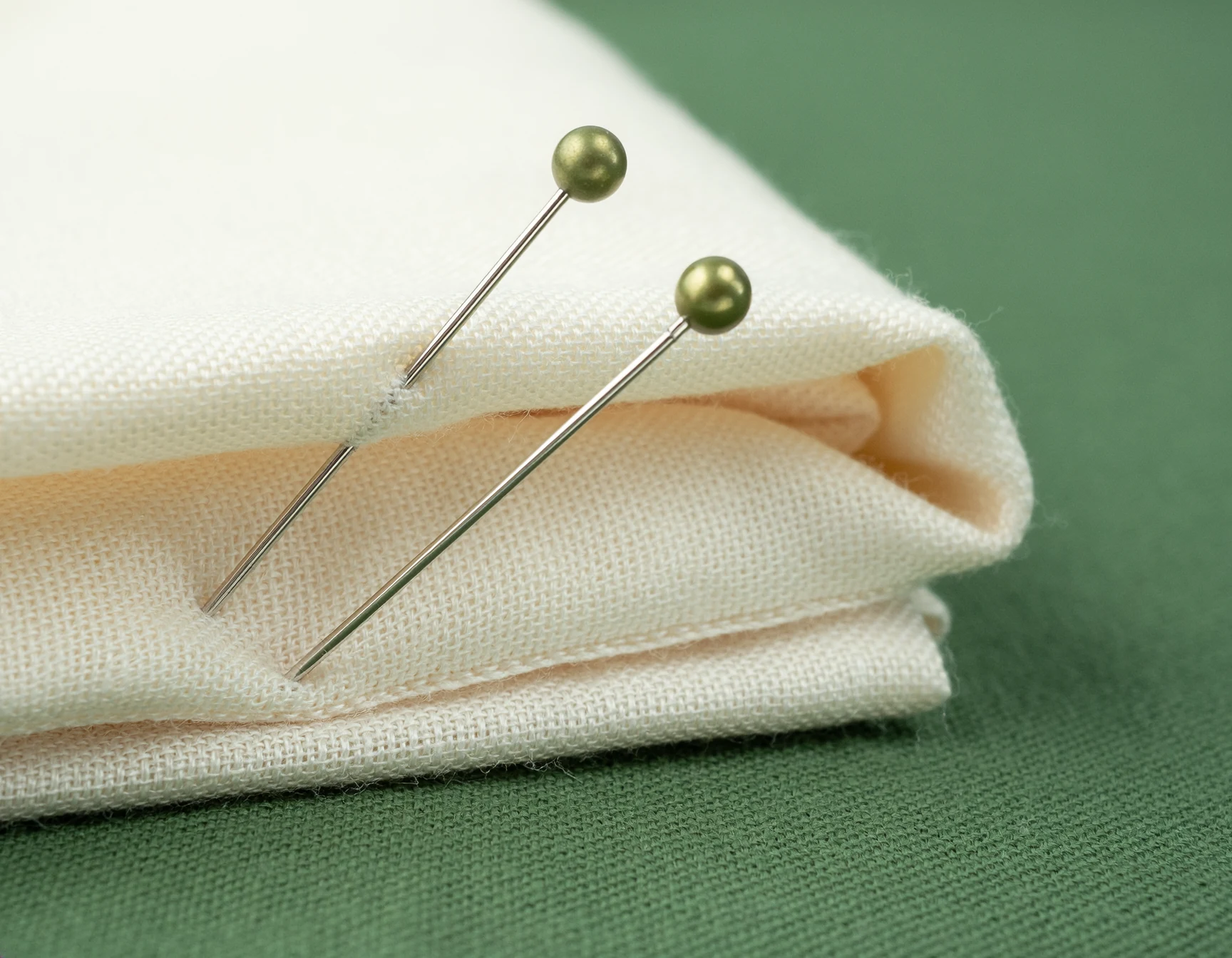
Quick exercise: hide the translations and recall the singular, then the plural. Next, look at a headed pin and a needle with an eye without handling them, and name each object. Finally, reread the second sentence, noting bi-d-dabbūsi: the preposition bi is followed by the noun with its assimilated article. Keep long vowels and doubled consonants clearly distinct.
Frequently asked questions
How do you say pin in Arabic?
A pin is دَبُّوس (dabbūs), a masculine noun. This lesson presents the straight pin used in sewing.
What is the plural of دَبُّوس?
The plural is دَبَابِيس (dabābīs), meaning “pins”. The vowels ā and ī are long.
What is the difference between دَبُّوس and إِبْرَة?
In sewing, دَبُّوس (dabbūs) is the pin that holds fabric in place; إِبْرَة (ibra) is the needle with an eye used with thread.
Linguistic source
The entry in the Cairo Arabic Language Academy’s al-Wasīṭ dictionary attests the meaning of a small-headed metal object used, among other things, to hold fabrics, as well as the plural دَبَابِيس. This lesson’s explanations and exercises were written for learning purposes.