Needle in Arabic: إِبْرَة, plural and examples
A needle is إِبْرَة (ibra) in Standard Arabic. This feminine noun refers here to the small needle used to sew by hand, pass thread through fabric or repair a garment. Its plural is إِبَر (ibar). This lesson focuses on sewing, not on medical uses of the word.
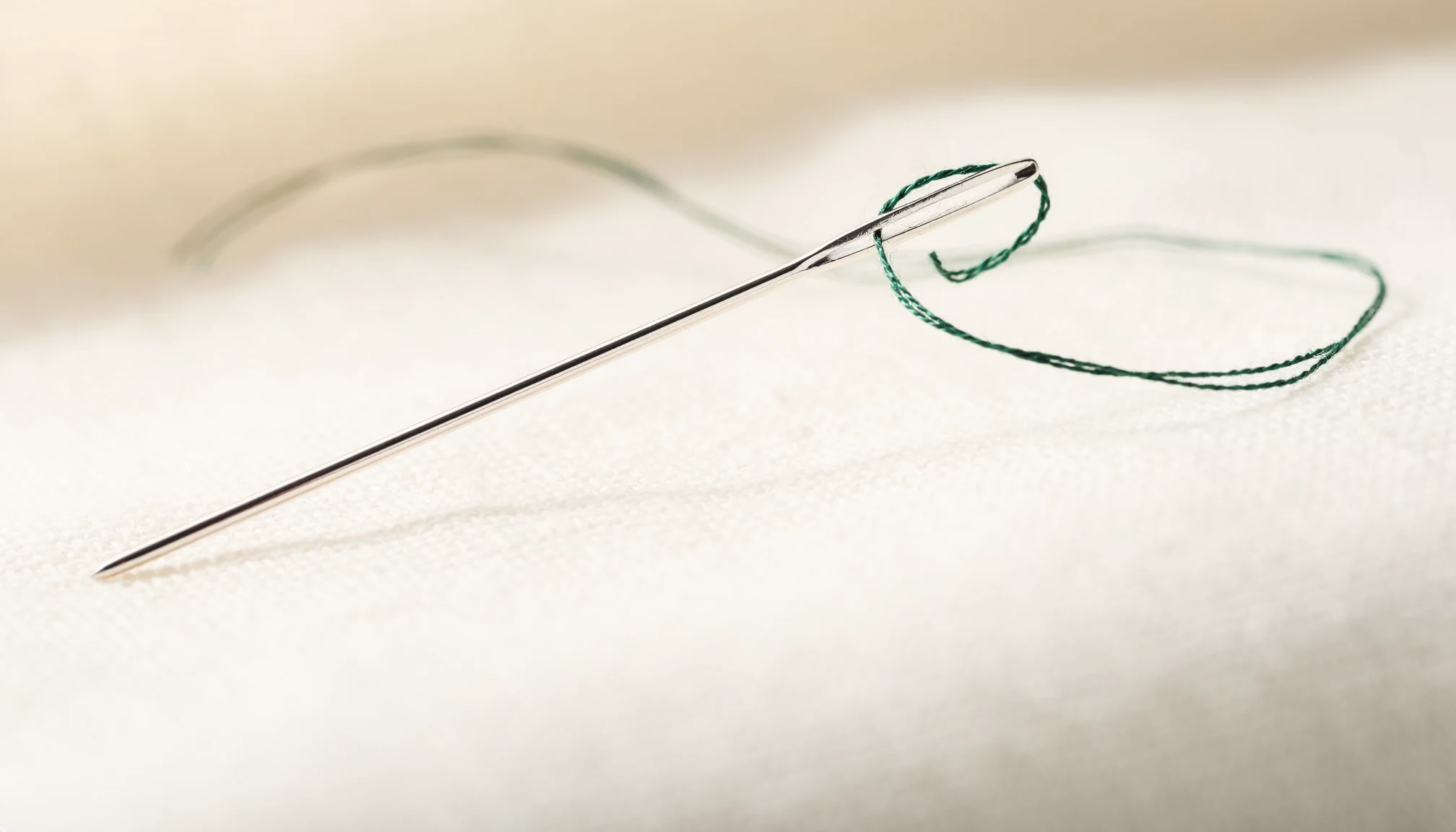
Forms to remember
| Meaning | Arabic | Transliteration |
|---|---|---|
| A needle — feminine | إِبْرَة | ibra |
| Needles | إِبَر | ibar |
| The needle | الْإِبْرَة | al-ibra |
| A sewing needle | إِبْرَةُ خِيَاطَةٍ | ibratu khiyāṭatin |
The first three forms are shown without case endings to make them easier to memorise. The expression إِبْرَةُ خِيَاطَةٍ specifies a sewing needle and retains its grammatical endings. The plural إِبَر is a broken plural: the vowels change within the word. It is therefore not formed simply by adding an ending to the singular.
Pronouncing ibra and ibar
In ibra, start with a short i, then pronounce b and r without adding a vowel between them. The Arabic r is produced with the tip of the tongue, unlike the usual English r. Finish with a short a. In the plural ibar, the a comes between b and r: pay attention to the different rhythm of the two forms.
The final letter ة in the singular is a tāʾ marbūṭa. In the simplified standalone form ibra, we do not write a final t in transliteration. This t reappears in connected grammatical reading, as in ibratun, or in the expression ibratu khiyāṭatin. The examples below show these endings; they may disappear or change when pausing at the end of a sentence.
Three sentences to practise
| Arabic and transliteration | Meaning |
|---|---|
| هٰذِهِ إِبْرَةٌ صَغِيرَةٌ. hādhihi ibratun ṣaghīratun. | This is a small needle. |
| أَحْتَاجُ إِلَى إِبْرَةٍ وَخَيْطٍ. aḥtāju ilā ibratin wa-khayṭin. | I need a needle and thread. |
| هٰذِهِ الْإِبَرُ رَفِيعَةٌ. hādhihi l-ibaru rafīʿatun. | These needles are fine. |
In the first sentence, the demonstrative and adjective are feminine singular, like the noun. In the third, the plural refers to objects: Standard Arabic normally uses feminine singular agreement. These sentences are original teaching examples, not quotations from the dictionary.
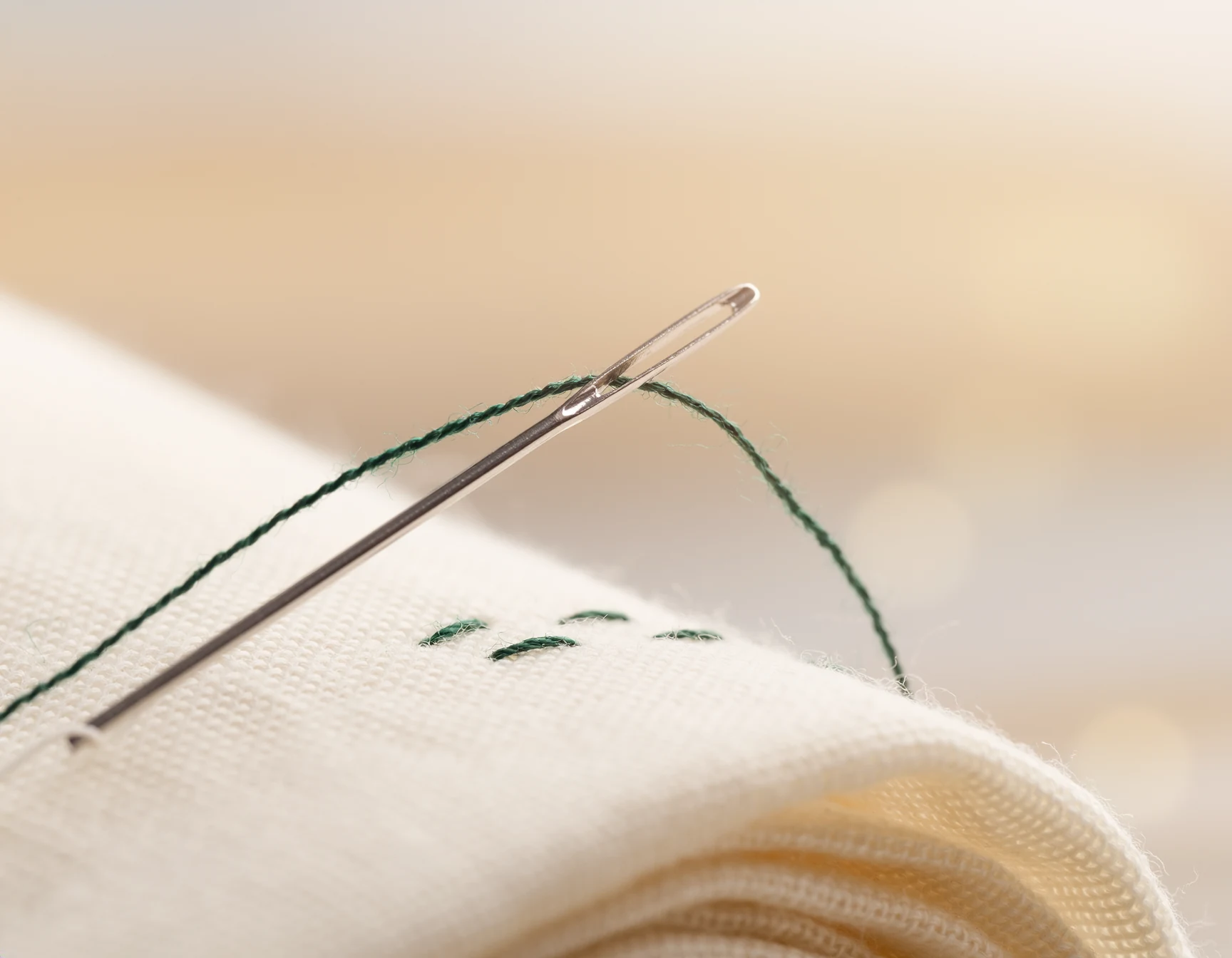
Connecting needle, thread and fabric
To remember this vocabulary, picture three items in a sewing kit. The needle, ibra, is the tool; the thread, خَيْط (khayṭ), passes through its eye; the fabric, قُمَاش (qumāsh), is the material being sewn. Learn these words together, then recall each one separately without looking at the translation. They help you describe a small clothing repair using concrete vocabulary.
Quick exercise: hide the Arabic forms and recall the singular, then the plural. Next, say the second sentence aloud. To check your answer, focus on the position of a in ibra and ibar and on the initial short i. Keep the sewing context in mind when using the word again.
Frequently asked questions
How do you say needle in Arabic?
A needle is إِبْرَة (ibra), a feminine noun. This lesson presents the needle used for sewing.
What is the plural of إِبْرَة?
The plural is إِبَر (ibar), meaning “needles”. The arrangement of vowels changes from the singular.
How do you say “a sewing needle”?
You can say إِبْرَةُ خِيَاطَةٍ (ibratu khiyāṭatin). This expression specifies that the needle is used for sewing.
Continue with Clothing Vocabulary
Linguistic source
The entry in the Cairo Arabic Language Academy’s al-Wasīṭ dictionary attests the sewing-related meaning and the plural إِبَر. The explanations and exercises in this lesson were written for learning purposes.