
Onion in Arabic: بَصَل (baṣal)
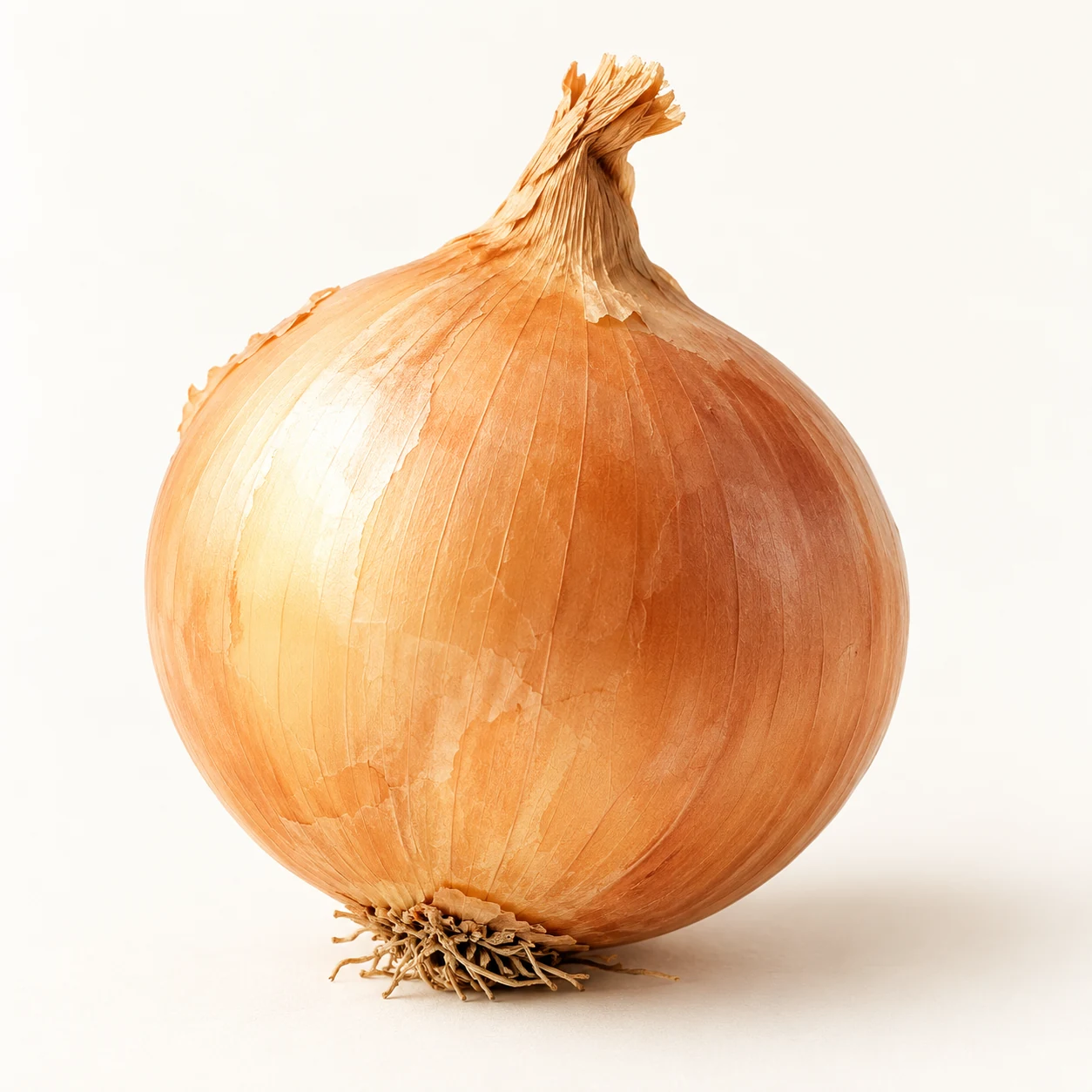
Onion is بَصَل (baṣal) in literary Arabic. This collective noun refers to onion as a food; a single item is بَصَلَة (baṣala), a feminine noun.
How to pronounce and write the word
Pronounce ba-ṣal, with two short a vowels. The ṣ represents ص, an emphatic consonant: it is “darker” than the s of س. Writing basal may help at first, but it hides this distinction. Without vowel marks, the word is بصل.
Forms to remember
| Meaning | Arabic | Transliteration |
|---|---|---|
| The food, collectively | بَصَل | baṣal |
| One onion, feminine | بَصَلَة | baṣala |
| Individual onions being counted | بَصَلَات | baṣalāt |
Using this word correctly
For an ingredient, the collective is natural: بِدُونِ بَصَلٍ means “without onion”. For a single item, use baṣala. The unit noun is grammatically feminine.
The unit noun’s ending ة changes to ات in baṣalāt. Learn the three forms together rather than looking for a fixed match between an English form and an Arabic form. In a recipe, “onions” may be translated with the collective.
Three example sentences
Individual words are given in their pause forms. The examples below also show grammatical endings to make the sentence structure clear.
- أُرِيدُ بَصَلَةً وَاحِدَةً.
I want just one onion. Wāḥida agrees in the feminine with baṣala.
- أَضَعُ الْبَصَلَ فِي الْحَسَاءِ.
I put onion in the soup. The collective names the ingredient.
- هَذَا الطَّعَامُ بِدُونِ بَصَلٍ.
This dish has no onion. The expression bidūni baṣalin is useful for specifying a preference.
Your Turn
Complete “just one onion” with baṣal or baṣala. How do you say “without onion”?
Show the answer
بَصَلَةٌ وَاحِدَةٌ ; بِدُونِ بَصَلٍ. The unit noun is used for counting; the collective names the ingredient.
Frequently asked questions
Why is baṣala feminine?
The final ة marks the feminine unit noun here. The adjective and the word for “just one” therefore also take feminine forms.
Can I write “bassal”?
This is another transliteration convention that highlights the consonant’s sound. However, it does not identify the emphatic consonant precisely: ص ; baṣal is more explicit.
Continue with this topic
Pour aller plus loin
Après « oignon », enrichissez votre pratique de l’arabe
Apprendre à lire et écrire l’arabe en 30 jours
Vous venez d’étudier « oignon » en arabe. Pour poursuivre la lecture et l’écriture, le livre de l’auteur de Mot-Arabe accompagne les débutants francophones dans une progression autour de l’alphabet, de l’écriture guidée et des mots du quotidien, avec des exercices et leurs corrigés.
Lien affilié Amazon · livre de l’auteur de Mot-Arabe.
Voir sur AmazonKeep learning
After “onion”, keep building your Arabic
Apprendre à lire et écrire l’arabe en 30 jours
You have just studied the Arabic word for “onion”. For further reading and writing practice, this book by the author of Mot-Arabe is written in French for French-speaking beginners. It offers a gradual approach to the alphabet, guided writing and everyday words, with exercises and answers.
Amazon affiliate link · book by the author of Mot-Arabe.
View on AmazonWeiterlernen
Nach „Zwiebel“ weiter Arabisch lernen
Apprendre à lire et écrire l’arabe en 30 jours
Sie haben gerade das arabische Wort für „Zwiebel“ kennengelernt. Für weiteres Lesen und Schreiben bietet dieses französischsprachige Buch des Autors von Mot-Arabe einen schrittweisen Einstieg für Anfänger mit Französischkenntnissen: Alphabet, angeleitetes Schreiben und Alltagswörter mit Übungen und Lösungen.
Amazon-Affiliate-Link · Buch vom Autor von Mot-Arabe.
Auf Amazon ansehenSigue aprendiendo
Después de «cebolla», sigue aprendiendo árabe
Apprendre à lire et écrire l’arabe en 30 jours
Acabas de estudiar cómo decir «cebolla» en árabe. Para seguir practicando la lectura y la escritura, este libro del autor de Mot-Arabe está escrito en francés para principiantes francófonos. Propone una progresión con alfabeto, escritura guiada, palabras cotidianas, ejercicios y soluciones.
Enlace de afiliado de Amazon · libro del autor de Mot-Arabe.
Ver en Amazon