
Mirror in Arabic: مِرْآة, Plural and Examples
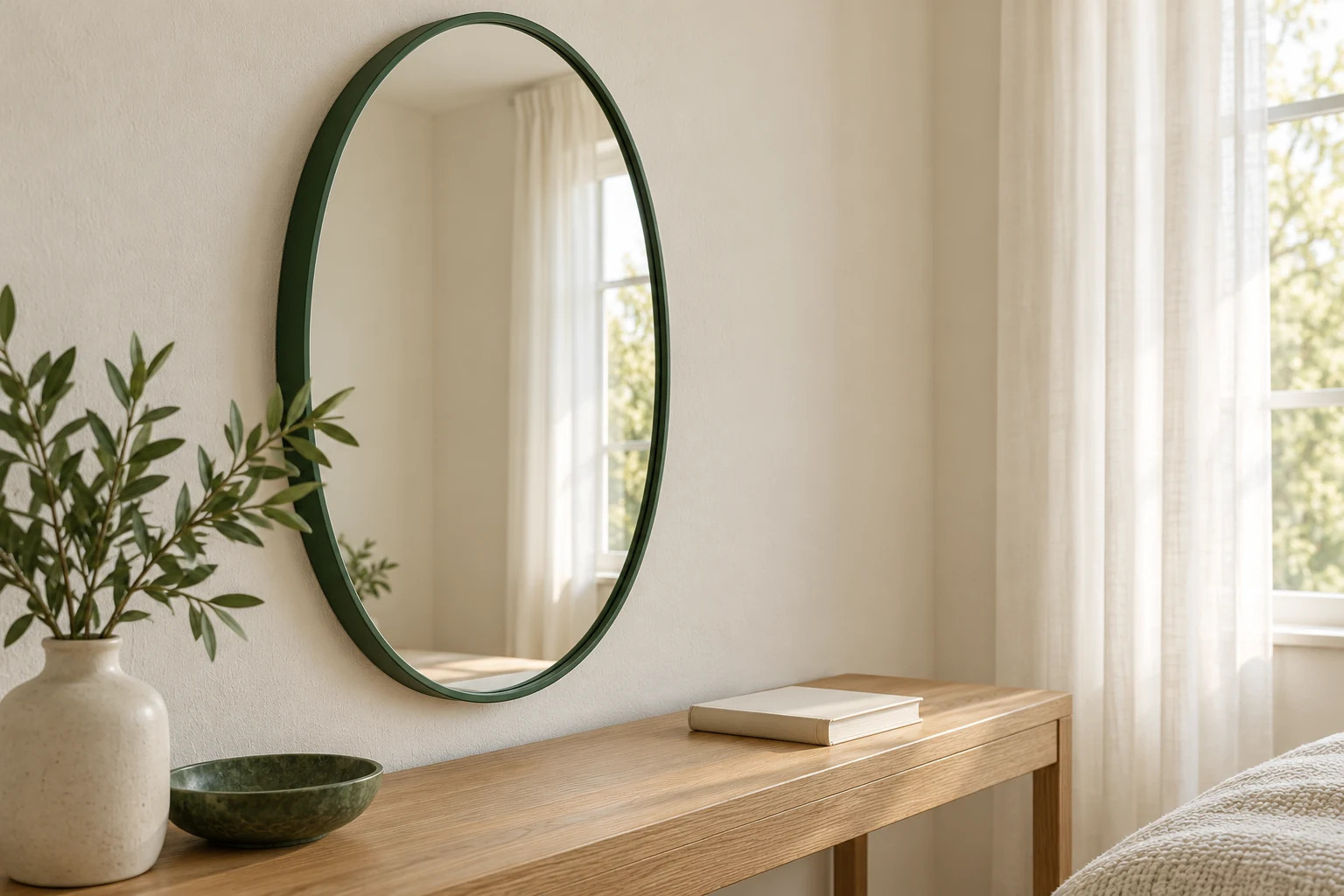
A mirror is مِرْآة (mirʾāh) in Standard Arabic. This noun is feminine, and its plural is مَرَايَا (marāyā). To describe your home, you can mention a mirror’s size, say where it is or describe the condition of several mirrors. Here are the forms to learn, pronunciation points and three simple sentences you can reuse.
Singular, plural and gender
The Arabic noun مِرْآة is feminine. This affects the words used with it: for example, it takes the feminine demonstrative هٰذِهِ. Its plural مَرَايَا is a broken plural, so you cannot form it simply by adding an ending to the singular. Learn both forms together and check which one you need before building a sentence.
The table uses citation forms without case endings. Adding the article الـ changes mirror to the mirror. In the plural, remember marāyā with two long ā vowels. The definite form keeps this same plural: add the article without returning to the singular or attaching an extra plural ending.
| Meaning | Arabic | Pronunciation |
|---|---|---|
| A mirror — feminine | مِرْآة | mirʾāh |
| Mirrors | مَرَايَا | marāyā |
| The mirror | الْمِرْآة | al-mirʾāh |
| The mirrors | الْمَرَايَا | al-marāyā |
Pronouncing mirʾāh and marāyā
In mirʾāh, the symbol ʾ represents hamza: a brief closure of the glottis, not an extra vowel. Here the letter آ represents this hamza followed by a long ā. Keep the initial i short and lengthen the ā. Do not confuse this glottal stop with the sound of ع, written ʿ in transliteration.
The final ة, called tāʾ marbūṭa, explains the difference between pausal mirʾāh and mirʾātun with the full indefinite nominative ending. The t becomes audible in this connected grammatical reading. With the article, al-mirʾāh retains the l: m is a moon letter. The examples below show full grammatical endings; pausing can change how their final sounds are pronounced.
Three sentences around the home
In the first example, big is feminine like the Arabic word for mirror. The second places the object on the wall. The last uses the non-human plural الْمَرَايَا: in Standard Arabic, the adjective نَظِيفَةٌ takes feminine singular agreement. These sentences do not need an expressed present-tense verb corresponding to is or are; English adds one in translation.
| Arabic | Meaning |
|---|---|
| هٰذِهِ مِرْآةٌ كَبِيرَةٌ. hādhihi mirʾātun kabīratun. | This is a big mirror. |
| الْمِرْآةُ عَلَى الْجِدَارِ. al-mirʾātu ʿalā l-jidāri. | The mirror is on the wall. |
| الْمَرَايَا نَظِيفَةٌ. al-marāyā naẓīfatun. | The mirrors are clean. |
Keeping the forms distinct
This lesson uses mirror in its concrete sense: an object in which you can see yourself, without exploring figurative uses. Mirʾāh and mirʾātun do not name different objects; the variation comes from the reading style and grammatical ending. To revise, hide the translations of the three sentences, identify the singular or plural, then find the adjective and explain its agreement.
Frequently asked questions
How do you say mirror in Arabic?
Mirror is مِرْآة (mirʾāh) in Standard Arabic. This transliteration gives the pausal form; here the word refers to a physical mirror.
What is the plural of mirʾāh?
The plural of مِرْآة is مَرَايَا (marāyā). It is a broken plural, best learned together with the singular.
Is mirror masculine or feminine in Arabic?
مِرْآة is feminine in Arabic. هٰذِهِ مِرْآةٌ كَبِيرَةٌ means this is a big mirror.
Why is mirʾātun also used?
Mirʾātun corresponds to مِرْآةٌ with the full indefinite nominative ending. The tāʾ marbūṭa is then pronounced t, unlike in the pausal form mirʾāh.
Continue around the home
Connect the mirror with other objects in the room. Find more everyday objects in the Home guide.
Linguistic sources
The singular, plural and gender were checked in the Cairo Academy’s dictionary. The pronunciation of tāʾ marbūṭa and non-human plural agreement follow the grammar references below. The three sentences are original teaching examples, not quotations.