
Table in Arabic: طَاوِلَة and Its Plural
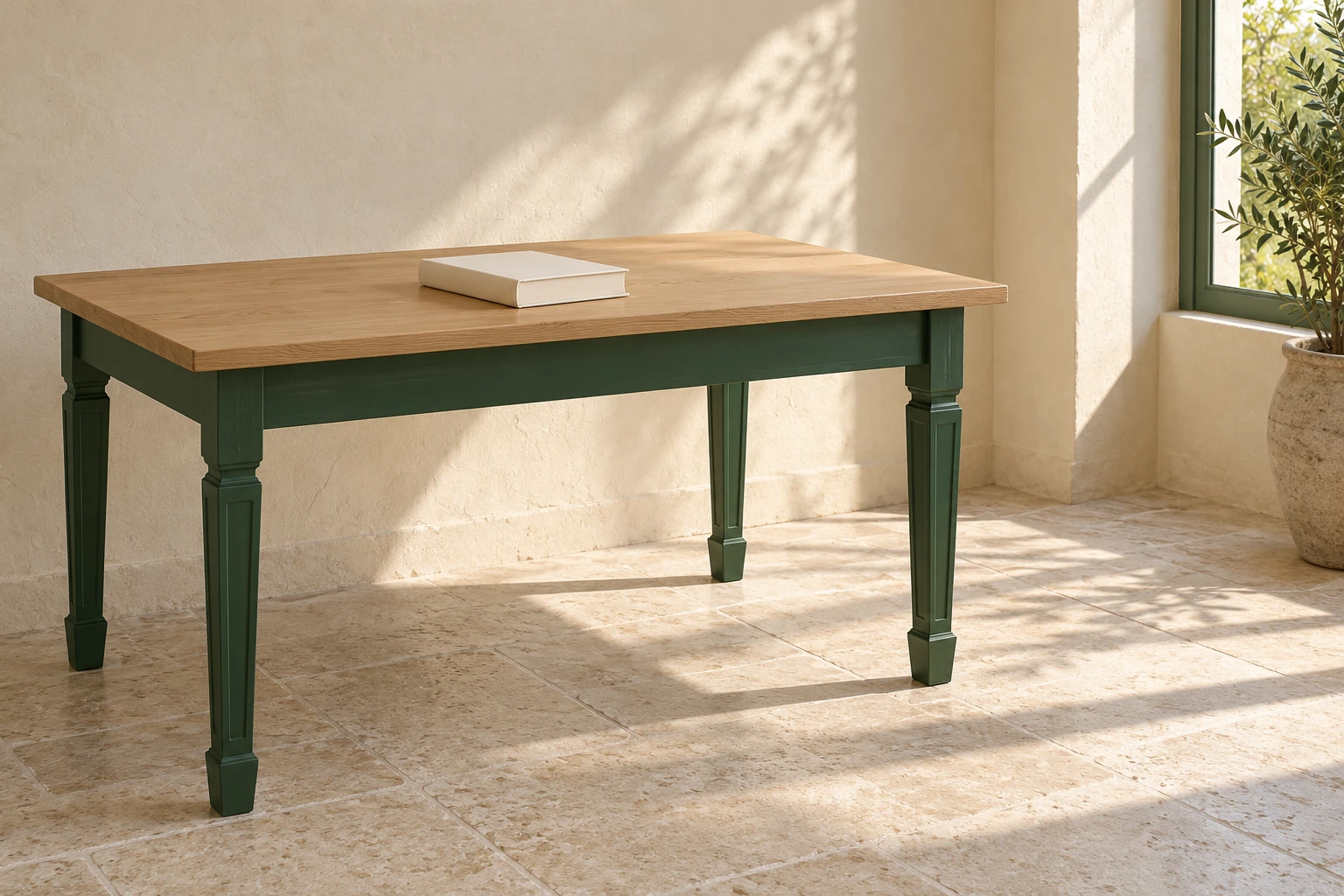
A table is طَاوِلَة (ṭāwila) in Standard Arabic. The noun is feminine and its plural is طَاوِلَات (ṭāwilāt). Start with a concrete sentence to learn this household word: the book is on the table. Then practise describing the furniture and distinguishing the everyday word from the term associated with meals.
The word for the furniture
Here, طَاوِلَة means the piece of furniture: a household table, without specifying its size or purpose. This lesson does not cover data tables or figurative expressions. Choose a translation according to what you mean, not just the English spelling.
Singular, plural and gender
The noun is feminine. In the plural, the singular ending -a becomes -āt: ṭāwila → ṭāwilāt. The table shows the forms to learn without sentence endings. In the examples, these endings indicate the noun’s grammatical role.
| Meaning | Arabic | Pronunciation |
|---|---|---|
| A table, feminine | طَاوِلَة | ṭāwila |
| Tables | طَاوِلَات | ṭāwilāt |
| The table | الطَّاوِلَة | aṭ-ṭāwila |
| The tables | الطَّاوِلَات | aṭ-ṭāwilāt |
Pronouncing ṭāwila
The dot under ṭ distinguishes ط from an ordinary t: it is an emphatic consonant. ā marks a long a. With the article al-, l assimilates to ṭ, giving aṭ-ṭāwila. The shadda on طّ makes the doubling visible. Use Arabic listening practice alongside transliteration.
The short form ṭāwila represents the word spoken in isolation. In connected reading, the final tāʾ marbūṭa can be pronounced t before an ending, as in ṭāwilatun. The three sentences below retain these grammatical endings.
Ṭāwila and māʾida: what is the difference?
مَائِدَة (māʾida) evokes the meal table, especially one set with food. Use ṭāwila as your basic word for the piece of furniture. This is not an absolute distinction between two objects: the meanings may overlap in context.
Three sentences to practise
These are original teaching examples. The first shows feminine agreement. In the second, the noun follows عَلَى and takes the ending -i. In the third, the non-human plural is used with a feminine singular demonstrative and adjective.
| Arabic | Meaning |
|---|---|
| هَٰذِهِ طَاوِلَةٌ صَغِيرَةٌ. hādhihi ṭāwilatun ṣaghīratun | This is a small table. |
| الْكِتَابُ عَلَى الطَّاوِلَةِ. al-kitābu ʿalā ṭ-ṭāwilati | The book is on the table. |
| هَٰذِهِ الطَّاوِلَاتُ جَدِيدَةٌ. hādhihi ṭ-ṭāwilātu jadīdatun | These tables are new. |
Frequently asked questions
How do you say table in Arabic?
The piece of furniture is طَاوِلَة (ṭāwila) in Standard Arabic. The noun is feminine.
What is the plural of ṭāwila?
The plural of طَاوِلَة is طَاوِلَات (ṭāwilāt), formed with the ending -āt.
Why is it pronounced aṭ-ṭāwila?
In الطَّاوِلَة, the l of the article al- assimilates to the sun letter ط. The ṭ is doubled, as shown by the shadda.
What is the difference between ṭāwila and māʾida?
Ṭāwila is the basic word for the furniture. Māʾida evokes the meal table, especially one set with food. Their meanings may overlap in context.
Continue around the home
Connect the table with the book on it and the chair. Explore the window, door and Home guide too.
Linguistic sources
This lesson uses Birzeit University’s Qabas for the word and its gender, the listed lexical resources for forms and nuances, and a university textbook for non-human plural agreement. The sentences are original teaching examples.