
Chair in Arabic: كُرْسِيّ and Its Plural
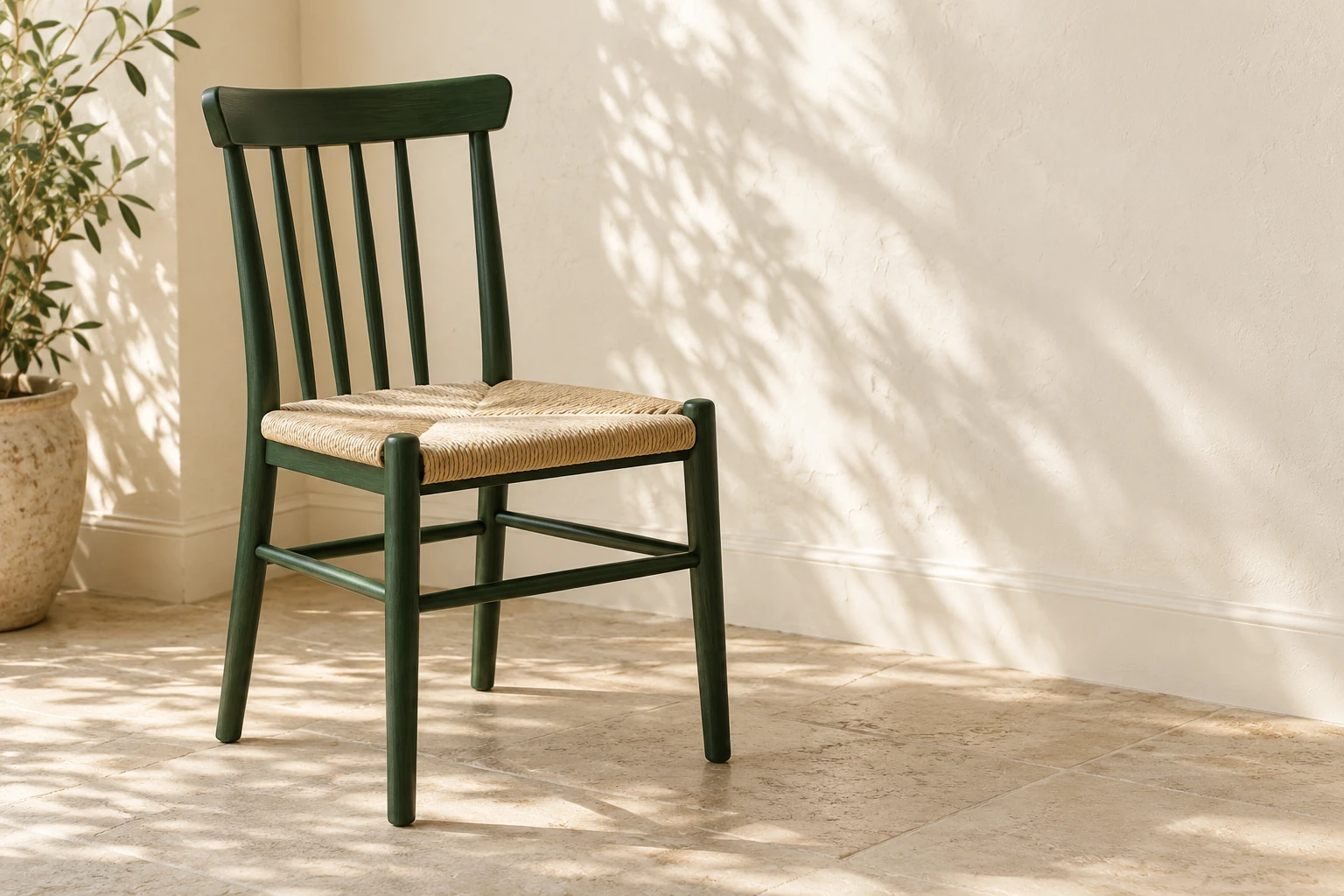
A chair is كُرْسِيّ (kursiyy) in Standard Arabic. This noun is masculine, and its plural is كَرَاسِيّ (karāsiyy). Learn the word, its gender and its plural together: these three clues help you name the piece of furniture and build a simple sentence about the home.
The word for a chair
In furniture vocabulary, كُرْسِيّ refers to an individual seat. The Cairo Academy dictionary describes a piece of furniture made of wood or another material for one seated person. This lesson focuses on that concrete meaning. In other contexts, the same word can refer to a university chair or a throne: the sentence determines the translation.
Singular, plural and gender
Karāsiyy is a broken plural: the pattern of kursiyy changes rather than simply receiving an ending. The table presents words without the grammatical endings used in sentences. With the article, الْكُرْسِيّ means “the chair”. Its masculine gender affects agreement: use jadīd for a new chair. The gender belongs to the Arabic noun, not to the object itself.
| Meaning | Arabic | Pronunciation |
|---|---|---|
| A chair, masculine | كُرْسِيّ | kursiyy |
| Chairs | كَرَاسِيّ | karāsiyy |
| The chair | الْكُرْسِيّ | al-kursiyy |
| The chairs | الْكَرَاسِيّ | al-karāsiyy |
Pronouncing kursiyy and karāsiyy
In kursiyy, u is short. In karāsiyy, ā marks a long a. The final يّ bears a shadda: our close transliteration represents it as yy rather than a single y. Keep this convention in both the singular and the plural. The l of the article al- remains audible before k: al-kursiyy.
The examples below show endings used in connected reading, such as -un and -u. When you pause at the end of a sentence, some endings are not pronounced. These are not new words: kursiyy remains the form to remember. Transliteration supports reading but does not replace listening to Arabic.
Chair, seat or armchair?
مَقْعَد (maqʿad), plural مَقَاعِد (maqāʿid), is broader: it denotes something you sit on. Depending on the context, it can mean a seat or a place to sit. It is not an automatic equivalent of “armchair”. To describe an armchair precisely, consider the context and the furniture’s features; kursiyy alone does not specify armrests or upholstery.
Three sentences to practise
These are original teaching examples. The first shows masculine singular agreement. The second places the chair next to the window. In the third, the chairs form a non-human plural: the demonstrative and adjective are feminine singular, a common agreement pattern in Standard Arabic. This does not change the noun’s masculine gender in the singular.
| Arabic | Meaning |
|---|---|
| هَذَا كُرْسِيٌّ جَدِيدٌ. hādhā kursiyyun jadīdun | This is a new chair. |
| الْكُرْسِيُّ بِجَانِبِ النَّافِذَةِ. al-kursiyyu bi-jānibi n-nāfidhati | The chair is next to the window. |
| هَذِهِ الْكَرَاسِيُّ جَدِيدَةٌ. hādhihi l-karāsiyyu jadīdatun | These chairs are new. |
Frequently asked questions
How do you say chair in Arabic?
A chair is كُرْسِيّ (kursiyy) in Standard Arabic. In this lesson, the word refers to the piece of furniture on which one person sits.
What is the plural of kursiyy?
The plural of كُرْسِيّ (kursiyy) is كَرَاسِيّ (karāsiyy). It is a broken plural: the word pattern changes.
Is chair masculine or feminine in Arabic?
كُرْسِيّ is masculine. “A new chair” is كُرْسِيٌّ جَدِيدٌ (kursiyyun jadīdun), with a masculine adjective.
What is the difference between kursiyy and maqʿad?
كُرْسِيّ (kursiyy) means a chair here. مَقْعَد (maqʿad) is broader and can refer to a seat or a place to sit, depending on the context.
Continue around the home
Place the chair near the window and connect these words with door, book and house. The Home guide and Vocabulary hub offer more lessons to explore.
Linguistic sources
The Cairo Arabic Language Academy records the meanings and plurals. Birzeit University’s Qabas identifies kursiyy as masculine. The Al Jazeera lesson explains agreement with non-human plurals. The sentences were written for this lesson.