Eye in Arabic: عَيْن (ʿayn), eyes and pronunciation
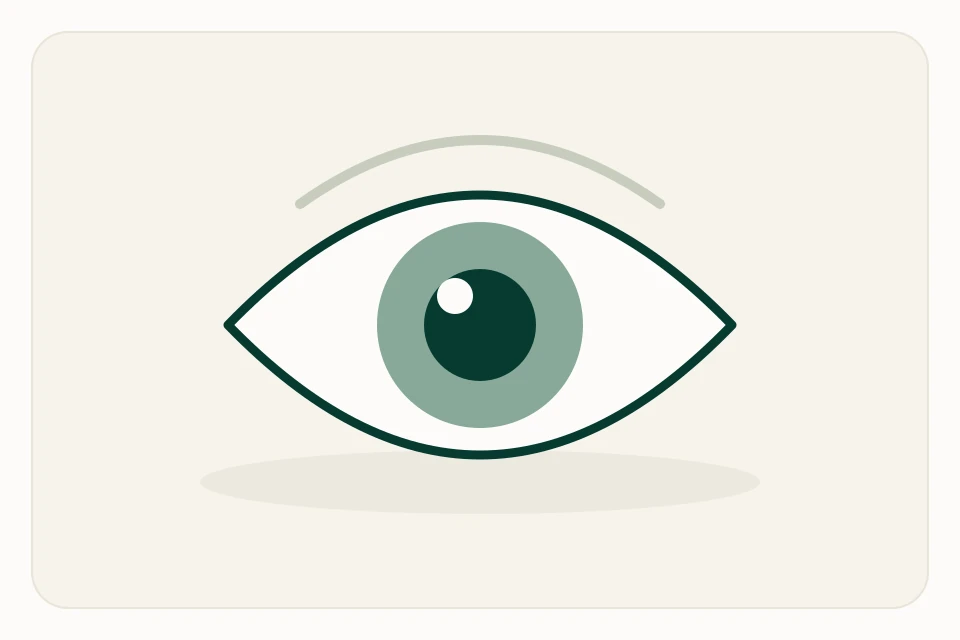
“Eye” is عَيْن (ʿayn). The noun is feminine. One way to say “the eyes” is الْعُيُون (al-ʿuyūn); for precisely two eyes, Arabic also has a dual form.
Pronunciation and spelling
The mark ʿ represents the letter ع, a consonant produced in the throat that should be articulated distinctly. Next, ay forms a single sequence: start with a and glide towards y. The initial consonant is part of the word.
Gender and useful forms
| Use | Arabic | Reading |
|---|---|---|
| An eye | عَيْن | ʿayn |
| The eyes | الْعُيُون | al-ʿuyūn |
| Another plural | أَعْيُن | aʿyun |
| Two eyes, nominative | عَيْنَانِ | ʿaynāni |
| Two eyes, accusative or genitive | عَيْنَيْنِ | ʿaynayni |
| My eye | عَيْنِي | ʿaynī |
The plurals عُيُون and أَعْيُن are both used for eyes. The dual is especially useful when referring to your two eyes. In عَيْنَايَ, “my two eyes” in the nominative, the possessive suffix replaces the usual dual ending.
Using the word correctly
Context matters: عَيْن can also mean a water spring and is the name of the letter ع. In عَيْن مَاء (ʿayn māʾ), it means a spring, not an eye. These meanings show why you should not automatically translate every occurrence as “eye”.
Three sentences to use
The examples below are in Standard Arabic, with written grammatical endings. In the tables, isolated words are given without final case endings, except where these distinguish the dual forms.
- هَذِهِ عَيْنِي.
hādhihi ʿaynī.
This is my eye. - عَيْنَايَ بُنِّيَّتَانِ.
ʿaynāya bunniyyatāni.
My eyes are brown. - أُغْلِقُ عَيْنَيَّ.
ughliqu ʿaynayya.
I close my eyes.
Your Turn
Recall the singular of عُيُون, then say whether the noun is masculine or feminine.
Show the Answer
عَيْن (ʿayn) is feminine.
Frequently asked questions
Is “aïn” a translation of eye?
It is another transliteration of the same Arabic word. Here, ʿayn makes the initial consonant explicit: ع.
How do you say my eye and my two eyes?
عَيْنِي (ʿaynī) means my eye. عَيْنَايَ (ʿaynāya) means my two eyes in the nominative; عَيْنَيَّ (ʿaynayya) is used, for example, as a direct object.
Continue with this topic
Pour aller plus loin
Après « œil », enrichissez votre vocabulaire
Le Robert & Collins – Dictionnaire visuel arabe
Vous venez d’apprendre « œil » en arabe. Pour poursuivre avec d’autres mots du quotidien, ce dictionnaire visuel français-arabe associe mots et images et complète vos révisions.
Lien affilié Amazon.
Voir sur AmazonKeep practising
After “eye”, build your vocabulary
Arabic English Bilingual Visual Dictionary
You have just learnt the Arabic word for “eye”. Continue exploring everyday vocabulary with DK’s English–Arabic visual dictionary, which pairs words with pictures.
Amazon affiliate link.
View on AmazonWeiter üben
Nach „Auge“ den Wortschatz erweitern
PONS Bildwörterbuch Arabisch: 1.500 nützliche Wörter für den Alltag
Sie haben das arabische Wort für „Auge“ kennengelernt. Mit dem deutsch-arabischen Bildwörterbuch von PONS können Sie weitere Alltagswörter anhand von Bildern lernen.
Amazon-Affiliate-Link.
Auf Amazon ansehenSigue practicando
Después de «ojo», amplía tu vocabulario
Diccionario de árabe 100% Visual
Acabas de aprender cómo se dice «ojo» en árabe. Sigue ampliando tu vocabulario cotidiano con el diccionario visual español-árabe de Larousse, que combina palabras e imágenes.
Enlace de afiliado de Amazon.
Ver en Amazon