
Father in Arabic: أَب (ab)
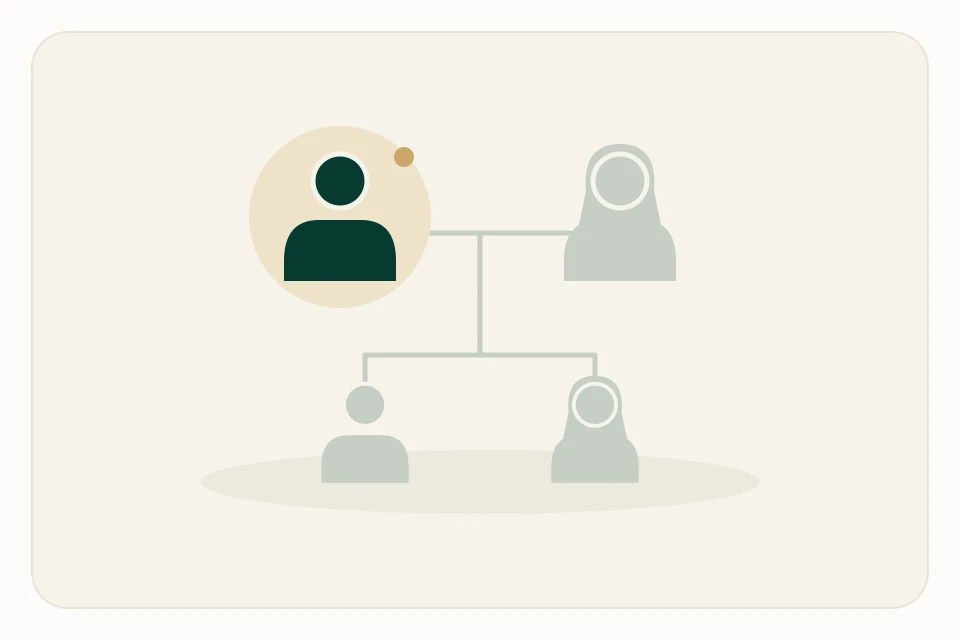
The word for father is أَب (ab) in Modern Standard Arabic. “My father” is أَبِي (abī), with a long ī. Learn this possessive form from the start: you can use it straight away to introduce your family.
How to pronounce and write the word
The word begins with a hamza, أ, followed by a short a, then b. Do not lengthen the a in ab. In abī, however, the final vowel ī is long. Without vowel marks, you will see أب and أبي.
Forms to remember
| Meaning | Arabic | Transliteration |
|---|---|---|
| Father, masculine | أَب | ab |
| Fathers | آبَاء | ābāʾ |
| My father | أَبِي | abī |
| Synonym: father | وَالِد | wālid |
Using this word correctly
Ab and وَالِد both mean father; وَالِدِي (wālidī) means “my father”. Familiar terms such as “dad” have their own uses and can vary between families and regions.
Ab is one of the nouns whose form changes in particular ways in certain possessive constructions. When addressing a man, “your father” can appear as أَبُوكَ, أَبَاكَ or أَبِيكَ depending on its grammatical role. These are not three different words. To begin with, memorize abī and a complete sentence rather than trying to build the other forms simply by joining pieces together.
Three example sentences
Individual words are given in their pause forms. The examples below also show grammatical endings to make the sentence structure clear.
- هَذَا أَبِي.
This is my father. The suffix ī means “my”.
- أَبِي فِي الْبَيْتِ.
My father is at home. No verb meaning “to be” is needed here in the present tense.
- أَتَحَدَّثُ مَعَ أَبِي.
I am talking with my father. The form abī stays the same after maʿa.
Your Turn
How do you distinguish “father” from “my father”? Then introduce your father in one sentence.
Show the answer
أَب means “father”; أَبِي, “my father”. To introduce him: هَذَا أَبِي. Do not add the article al- to this possessive form.
Frequently asked questions
Are ab and abī interchangeable?
No: ab names the family relationship, while abī specifies “my father”. The final ī carries meaning; it is not an optional ending.
Does abū always simply mean father?
Abū is a form used in certain constructions, including names or titles meaning “father of…”. It does not replace ab in every context.
Continue with this topic
Pour aller plus loin
Après « père », enrichissez votre pratique de l’arabe
Apprendre à lire et écrire l’arabe en 30 jours
Vous venez d’étudier « père » en arabe. Pour poursuivre la lecture et l’écriture, le livre de l’auteur de Mot-Arabe accompagne les débutants francophones dans une progression autour de l’alphabet, de l’écriture guidée et des mots du quotidien, avec des exercices et leurs corrigés.
Lien affilié Amazon · livre de l’auteur de Mot-Arabe.
Voir sur AmazonKeep learning
After “father”, keep building your Arabic
Apprendre à lire et écrire l’arabe en 30 jours
You have just studied the Arabic word for “father”. For further reading and writing practice, this book by the author of Mot-Arabe is written in French for French-speaking beginners. It offers a gradual approach to the alphabet, guided writing and everyday words, with exercises and answers.
Amazon affiliate link · book by the author of Mot-Arabe.
View on AmazonWeiterlernen
Nach „Vater“ weiter Arabisch lernen
Apprendre à lire et écrire l’arabe en 30 jours
Sie haben gerade das arabische Wort für „Vater“ kennengelernt. Für weiteres Lesen und Schreiben bietet dieses französischsprachige Buch des Autors von Mot-Arabe einen schrittweisen Einstieg für Anfänger mit Französischkenntnissen: Alphabet, angeleitetes Schreiben und Alltagswörter mit Übungen und Lösungen.
Amazon-Affiliate-Link · Buch vom Autor von Mot-Arabe.
Auf Amazon ansehenSigue aprendiendo
Después de «padre», sigue aprendiendo árabe
Apprendre à lire et écrire l’arabe en 30 jours
Acabas de estudiar cómo decir «padre» en árabe. Para seguir practicando la lectura y la escritura, este libro del autor de Mot-Arabe está escrito en francés para principiantes francófonos. Propone una progresión con alfabeto, escritura guiada, palabras cotidianas, ejercicios y soluciones.
Enlace de afiliado de Amazon · libro del autor de Mot-Arabe.
Ver en Amazon